
Skiing in Abruzzo – snow report
The most popular ski resorts, the updated snow report and useful information on how to find lifts or book accommodation for your winter holiday


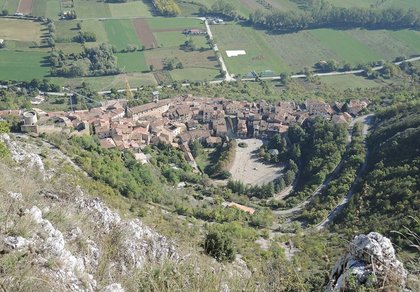
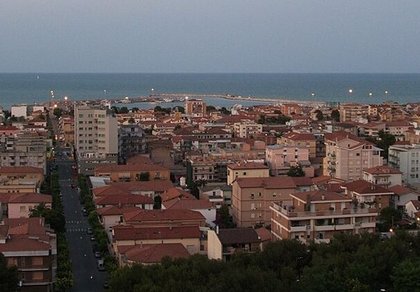
San Demetrio ne’ Vestini lies in the lower Aterno valley, south-east of L’Aquila, at the foot of the Altopiano delle Rocche. Its territory includes the Stiffe Caves, one of the most visited caves in Abruzzo, and little Lake Sinizzo.
The most popular ski resorts, the updated snow report and useful information on how to find lifts or book accommodation for your winter holiday

View the webcams in Abruzzo and check real‑time weather conditions. Some webcams belong to www.abruzzoparchi.it, others are located throughout the region

Weather forecasts for the coming days in Abruzzo. Live weather via our webcams and temperatures recorded in several mountain areas
Maps for trekking, mountain biking, ski touring, running and horse riding. You can also download the GPX track of each route
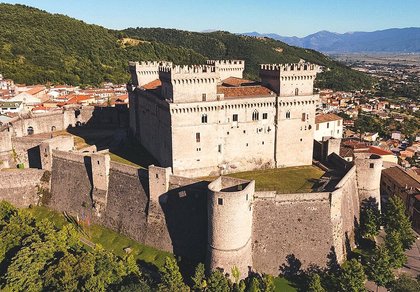
Abruzzo’s villages are famous for their fortresses, mountains and the traditional trabocchi along the southern coast
One of Italy’s most famous and oldest national parks
Located in the heart of the Apennines, home to the beautiful villages of the Rocche Plateau
One of the snowiest places in Italy, a unique mountain massif rising close to the sea

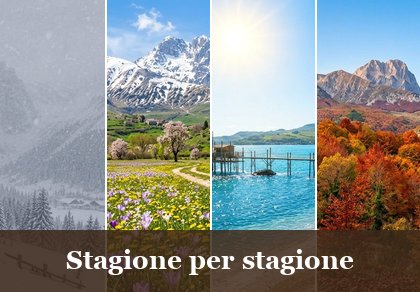
Choose between sea or mountains, summer or winter, a sporty holiday or a relaxing one — Abruzzo has it all

Abruzzo is famous for its cuisine, both mountain and coastal, with traditions that vary from area to area
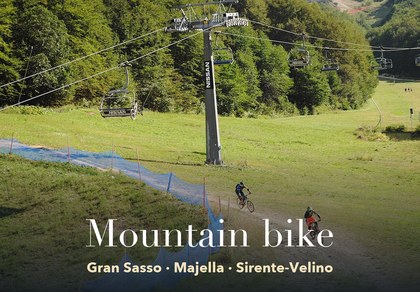
Walks, diving, climbing, mountain biking, horse riding — all outdoor activities available in Abruzzo
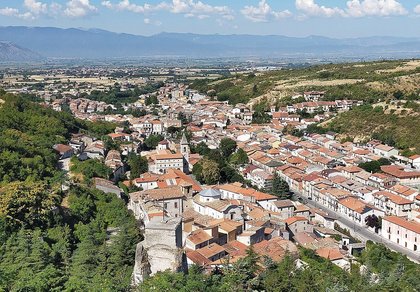
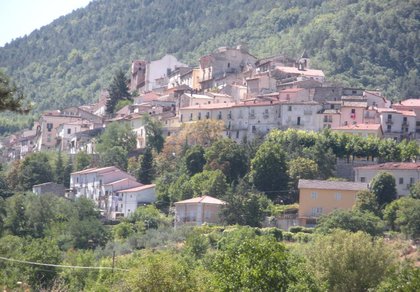
About two thousand people, seven old «ville» joined into one village, 18th-century palaces built with the wealth of transhumance. Four kilometres away, in the hamlet of Stiffe, an underground river flows inside the mountain among waterfalls and pools.
The territory ranges from 640 metres on the plain to 1,250 metres in the mountains bordering the Altopiano delle Rocche.
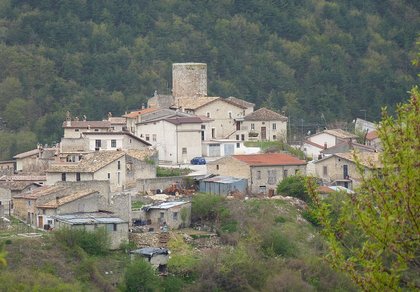
San Demetrio ne’ Vestini lies south-east of L’Aquila, in the lower Aterno valley, along the Subequana road towards the Subequana valley and Sulmona. The name recalls the Vestini, the Italic people who lived in the valley before the Romans. In the Middle Ages it was not one village but a group of scattered hamlets: Cavantoni, Cardamone, Cardabello, Colle, Collarano, Villagrande and Villa San Giovanni. The castle of Sinizzo, now gone, was among the founders of L’Aquila in 1254. The hamlet of Stiffe, with its castle, held out against the siege of Braccio da Montone in 1423.
Sheep farming and transhumance made the Cappa, Cappelli, Marimpietri and Visca families rich, and they built the palaces of the village. Since 1691 there has been a market every Friday, a tradition that continues today. «ne’ Vestini» was added to the name in 1862 to distinguish it from San Demetrio Corone in Calabria. The earthquake of 6 April 2009 also struck San Demetrio, with three victims and damage to the churches and to Lake Sinizzo.
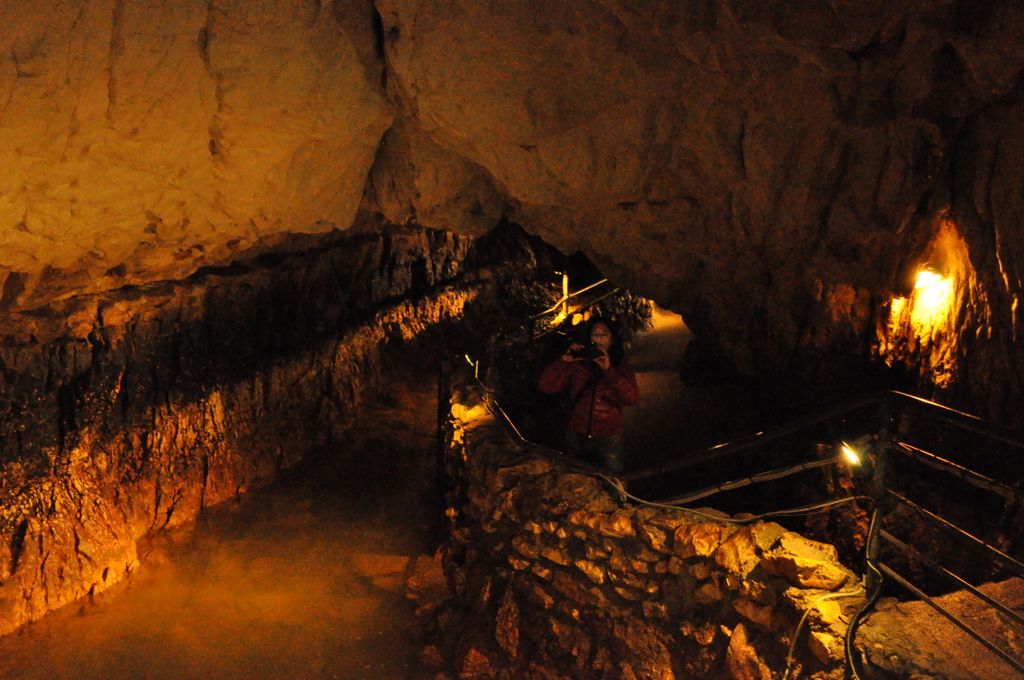
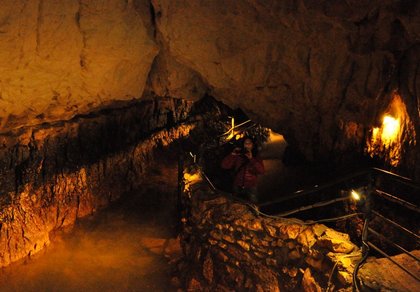
A «living» cave: the water that disappears on the Altopiano delle Rocche comes back out here, among waterfalls and pools.
The Stiffe Caves are a karst resurgence: the underground stream born on the Altopiano delle Rocche still flows inside the mountain, forming waterfalls, rapids and small lakes. Visits are always guided and last about an hour: the tourist route is about 700 metres one way on walkways, with a 60-metre difference in height and about 150 steps. Inside, the temperature is about 10 °C all year round and the air is very damp: bring a jacket even in summer. It is suitable for families with children who can walk on their own, not for pushchairs.
The ticket office is in the village of Stiffe and tickets must be bought before entering. Opening times, prices, accessibility and tips are on our Stiffe Caves page; ticket office: 0862 583798.
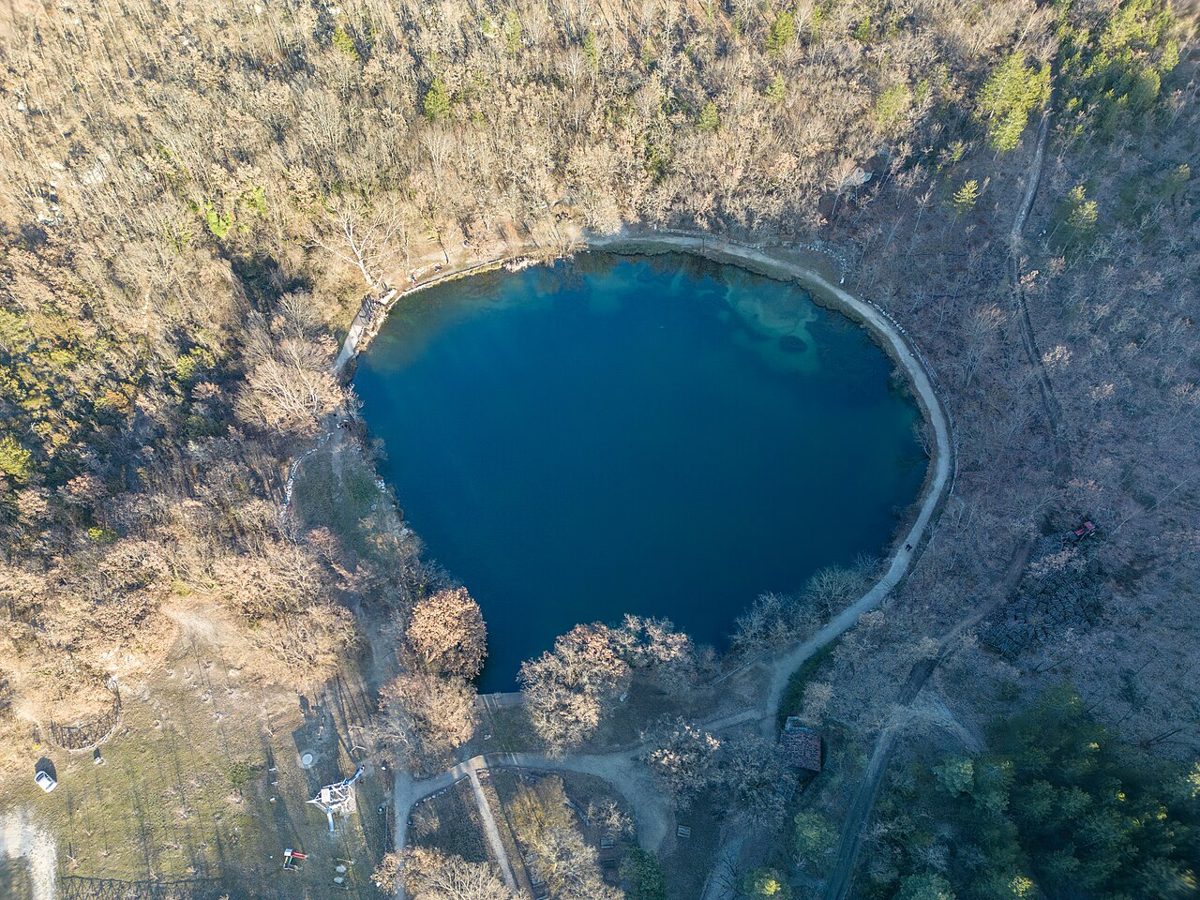
Just outside the village is Lake Sinizzo, a small karst lake fed by springs and named after the vanished castle. It is surrounded by meadows and trees: this is where the people of the valley come for a walk or a picnic on sunny days. The 2009 earthquake damaged its banks. From the surrounding hills you can see the Gran Sasso to the north and the Sirente to the south.
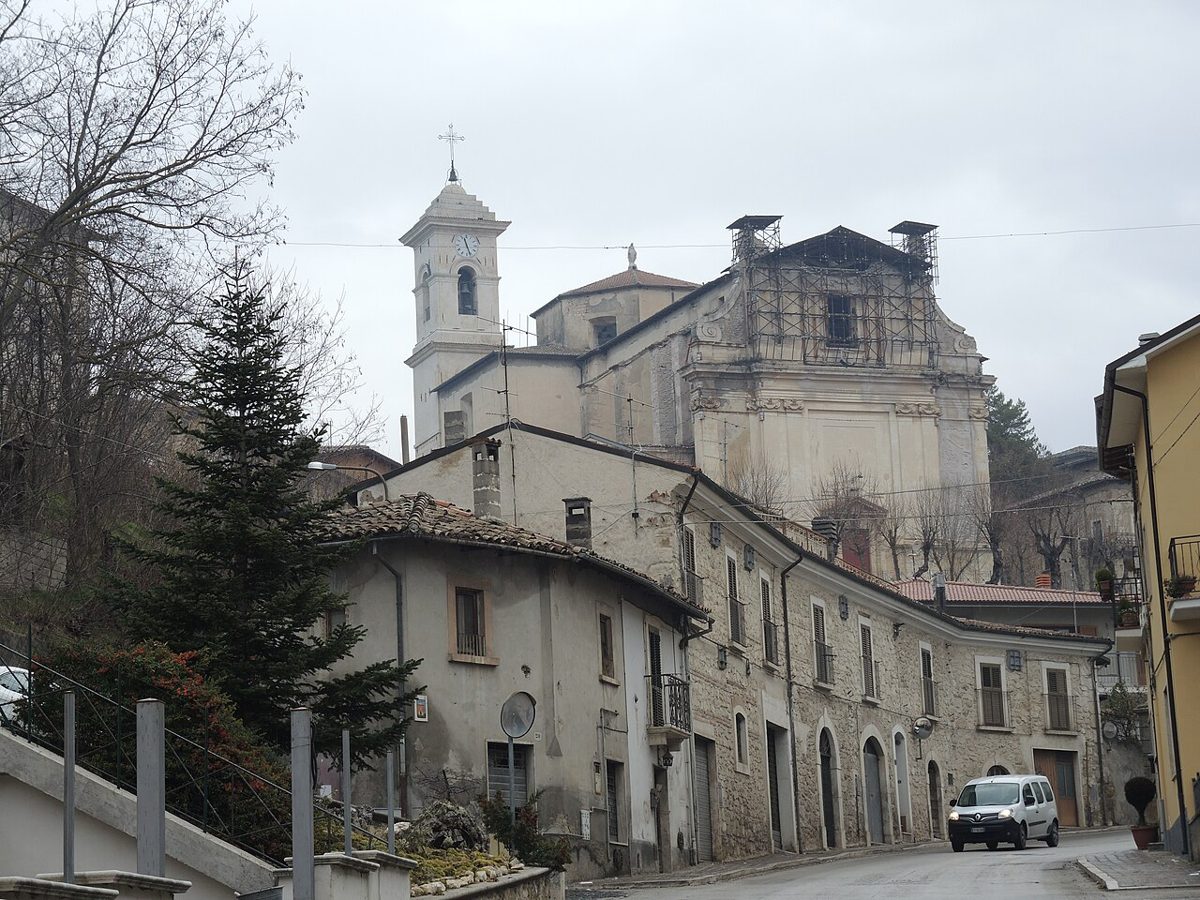
The largest church, in the centre of the village, was built in 1820 by the Cappelli family in late baroque style, on a Latin cross plan. Behind the high altar is the altarpiece of the Madonna dei Raccomandati with Saint Demetrius; inside are two paintings by Teofilo Patini. The 2009 earthquake brought down its façade.
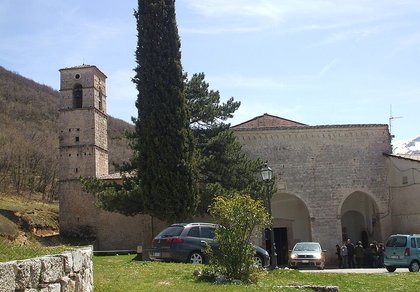
In the Cona area, south of the village, it stands on an old medieval chapel and was rebuilt in the 17th century. It lies along the old pilgrimage route and the shepherds’ drove roads; a Roman tombstone is set into its north wall.
The 18th-century Palazzo Pignatelli Cappelli stands at the highest point of the village. The Palazzo ducale, in via Cardabello facing piazza del Duca, was built over the old castle. In via Nunzio Tatozzi is the neoclassical Palazzo Tatozzi. Along via Nazionale are the public gardens and the war memorial, inaugurated in 1938.
In August the municipality organises the Festa del Grano e del Pane (wheat and bread festival), held in turn in the hamlets. Every Friday morning there is the market, as there has been since 1691. Each hamlet also has its patron saint’s festival. Dates and programmes change every year: check the municipality’s website.
In the valley people eat the food of shepherds and fields: arrosticini, pecora alla callara, sheep’s cheeses, pulses and wood-fired bread. From the nearby Navelli plain comes L’Aquila saffron. More products in Flavours of the parks, all the recipes in typical Abruzzo cuisine.
Restaurants, pizzerias, bars, farm stays, B&Bs, shops and churches of San Demetrio and its hamlets: open the list.
🔎 Search all of Abruzzo · Data checked on Google Maps, Tripadvisor and the businesses’ websites.
From Rome and Pescara: A24 motorway, L’Aquila Est exit, then the SS17 and the signs for San Demetrio ne’ Vestini. From L’Aquila: the SR261 Subequana road, about 18 km. For the caves follow the signs for Stiffe. By train: the Sulmona-L’Aquila line stops at San Demetrio station, about 1.6 km from the village. Getting around Abruzzo.
San Demetrio ne’ Vestini, at 662 m, is best visited in spring and autumn for the mild weather, all year round for the historic centre and from June to September for hiking and trails.
About an hour, always with a guide: the route is about 700 metres one way on walkways, with about 150 steps. Inside it is about 10 °C all year round, so bring a jacket. Tickets are sold at the Stiffe ticket office; everything is in the Stiffe Caves section.
In San Demetrio and its hamlets there are restaurants, pizzerias, bars, farm stays, B&Bs and holiday homes, a few minutes from the caves. The list with map and websites is in the Where to eat and stay section.
In the «Where to eat, sleep and what to find» box on this page: restaurants, hotels, B&Bs, bars, local produce shops, churches, monuments, huts and tourist offices, with a Google Maps link. All villages are also in the search by category.

Rocca di Mezzo, Rocca di Cambio, Rovere, Terranera, Ovindoli

The Medieval Villages of the Gran Sasso, with their castles, towers, and ancient settlements that once dominated Abruzzo

The village of Cappadocia, in the western part of the Aquilan Abruzzo

The village of Casamaina, a favourite among skiers heading to Campo Felice or Ovindoli

The village of Castel del Monte, the highest settlement in the Gran Sasso area

The village of Civitella Alfedena, in the Abruzzo, Lazio and Molise National Park

Mountaineering on the Gran Sasso, the ideal place for freeride lovers seeking demanding routes

The city of L'Aquila, with its restored Renaissance palaces, a place rich in culture

The 2012 snowfall in L'Aquila brought over one metre of snow in 24 hours — unbelievable images

The village of Pescasseroli, heart of the Abruzzo, Lazio and Molise National Park

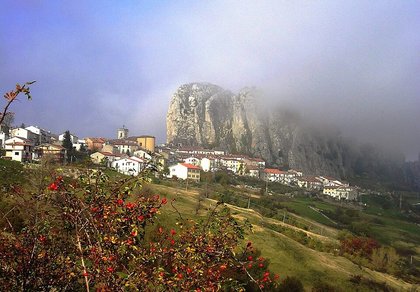
The village of Pietracamela, on the north-eastern side of the Gran Sasso, at the foot of Corno Piccolo — a magical and unexpected place

Prati di Tivo, a winter ski resort offering breathtaking views to all who visit

San Domenico and the Serpari ritual, held every first Thursday of May

The 2012 snowfall in Scoppito reached nearly two metres in height

The village of Opi, a splendid settlement in the Abruzzo, Lazio and Molise National Park






Punta Aderci, with the Abruzzese trabocchi stretching from Vasto through Fossacesia to San Vito Chietino


Lake Campotosto, nestled between the Gran Sasso and Monti della Laga ranges, within the national park of the same name

The Capodacqua reservoir, with submerged mills and crystal-clear waters, a paradise for divers

The swimming lake of Scanno, named after the village overlooking it — a place worth visiting

Lake Sinizzo, just a few kilometres from San Demetrio, is the ideal place for nature lovers seeking fresh, clear waters

Lake San Domenico, named after the nearby hermitage; its crystal-clear waters make it unique. Swimming not allowed

The Fountain of the 99 Spouts, a symbol of the city of L'Aquila

The Basilica of Santa Maria di Collemaggio, resting place of Pope Celestine V

The Sanctuary of Madonna d'Appari, set among the rocks along the road between Paganica and Assergi

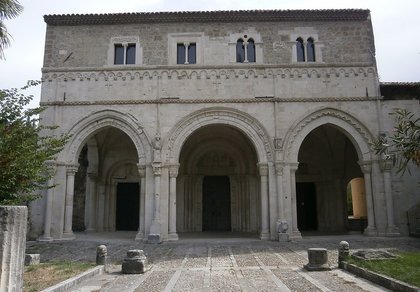
The Church of San Panfilo, in the municipality of Tornimparte, with its frescoes — a place worth visiting

The Stiffe Caves, inside the Velino-Sirente Regional Park — a magical place to explore
The most popular ski resorts, the updated snow report and useful information on how to find lifts or book accommodation for your winter holiday
Vai
View the webcams in Abruzzo and check real‑time weather conditions. Some webcams belong to www.abruzzoparchi.it, others are located throughout the region
Vai
Weather forecasts for the coming days in Abruzzo. Live weather via our webcams and temperatures recorded in several mountain areas
Vai
Maps for trekking, mountain biking, ski touring, running and horse riding. You can also download the GPX track of each route
Vai
Walks, diving, climbing, mountain biking, horse riding — all outdoor activities available in Abruzzo
Vai
Choose between sea or mountains, summer or winter, a sporty holiday or a relaxing one — Abruzzo has it all
Vai
Abruzzo is famous for its cuisine, both mountain and coastal, with traditions that vary from area to area
Vai
Abruzzo’s villages are famous for their fortresses, mountains and the traditional trabocchi along the southern coast
Vai
One of Italy’s most famous and oldest national parks
Vai
One of Italy’s wildest parks, with typical Apennine landscapes and Dolomite‑like peaks
Vai
Located in the heart of the Apennines, home to the beautiful villages of the Rocche Plateau
Vai
One of the snowiest places in Italy, a unique mountain massif rising close to the sea
Vai