
Skiing in Abruzzo – snow report
The most popular ski resorts, the updated snow report and useful information on how to find lifts or book accommodation for your winter holiday


Avezzano, at about 700 metres, is the main town of the Marsica: it overlooks the Fucino plain and is dominated by Monte Velino. In about half an hour you reach the slopes of Ovindoli – Monte Magnola, and a little further on are Campo Felice and the Altopiano delle Rocche. This guide covers the mountains, winter and summer sports, monuments, archaeology, typical dishes and practical information for visiting the town and its surroundings.
The most popular ski resorts, the updated snow report and useful information on how to find lifts or book accommodation for your winter holiday
View the webcams in Abruzzo and check real‑time weather conditions. Some webcams belong to www.abruzzoparchi.it, others are located throughout the region

Weather forecasts for the coming days in Abruzzo. Live weather via our webcams and temperatures recorded in several mountain areas
Maps for trekking, mountain biking, ski touring, running and horse riding. You can also download the GPX track of each route
Abruzzo’s villages are famous for their fortresses, mountains and the traditional trabocchi along the southern coast
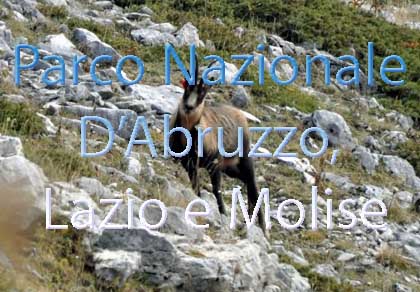
One of Italy’s most famous and oldest national parks
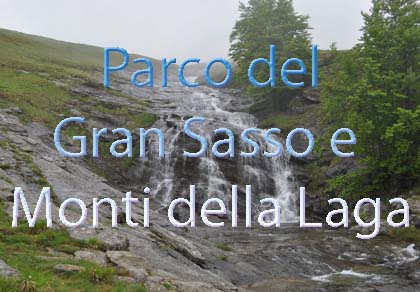
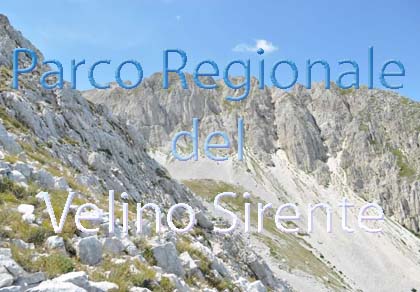
Located in the heart of the Apennines, home to the beautiful villages of the Rocche Plateau
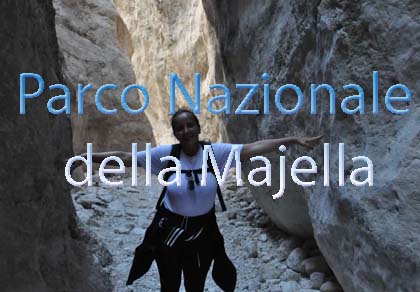
One of the snowiest places in Italy, a unique mountain massif rising close to the sea
Choose between sea or mountains, summer or winter, a sporty holiday or a relaxing one — Abruzzo has it all

Abruzzo is famous for its cuisine, both mountain and coastal, with traditions that vary from area to area
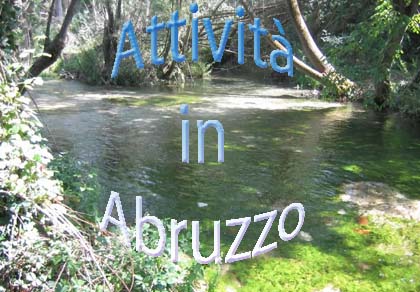
Walks, diving, climbing, mountain biking, horse riding — all outdoor activities available in Abruzzo

Rocca di Mezzo, Rocca di Cambio, Rovere, Terranera, Ovindoli

The Medieval Villages of the Gran Sasso, with their castles, towers, and ancient settlements that once dominated Abruzzo

The village of Cappadocia, in the western part of the Aquilan Abruzzo

The village of Casamaina, a favourite among skiers heading to Campo Felice or Ovindoli

The village of Castel del Monte, the highest settlement in the Gran Sasso area

The village of Civitella Alfedena, in the Abruzzo, Lazio and Molise National Park

Mountaineering on the Gran Sasso, the ideal place for freeride lovers seeking demanding routes

The city of L'Aquila, with its restored Renaissance palaces, a place rich in culture

The 2012 snowfall in L'Aquila brought over one metre of snow in 24 hours — unbelievable images

The village of Pescasseroli, heart of the Abruzzo, Lazio and Molise National Park

The village of Pietracamela, on the north-eastern side of the Gran Sasso, at the foot of Corno Piccolo — a magical and unexpected place

Prati di Tivo, a winter ski resort offering breathtaking views to all who visit

San Domenico and the Serpari ritual, held every first Thursday of May

The 2012 snowfall in Scoppito reached nearly two metres in height

The village of Opi, a splendid settlement in the Abruzzo, Lazio and Molise National Park



Punta Aderci, with the Abruzzese trabocchi stretching from Vasto through Fossacesia to San Vito Chietino


Lake Campotosto, nestled between the Gran Sasso and Monti della Laga ranges, within the national park of the same name

The Capodacqua reservoir, with submerged mills and crystal-clear waters, a paradise for divers

The swimming lake of Scanno, named after the village overlooking it — a place worth visiting

Lake Sinizzo, just a few kilometres from San Demetrio, is the ideal place for nature lovers seeking fresh, clear waters

Lake San Domenico, named after the nearby hermitage; its crystal-clear waters make it unique. Swimming not allowed

The Fountain of the 99 Spouts, a symbol of the city of L'Aquila

The Basilica of Santa Maria di Collemaggio, resting place of Pope Celestine V, the only pope buried outside Rome’s walls

The Sanctuary of Madonna d'Appari, set among the rocks along the road between Paganica and Assergi

The Church of San Panfilo, in the municipality of Tornimparte, with its frescoes — a place worth visiting

The Stiffe Caves, inside the Velino-Sirente Regional Park — a magical place to explore
A modern town, rebuilt after the 1915 earthquake, between the Fucino plain and some of the highest mountains in the Apennines. In half an hour you are on the Ovindoli slopes, and the Velino trails start just a few kilometres from town.
The Velino and the Sirente close off the Marsica to the north, and Monte Salviano rises above the town.
Avezzano lies on the edge of the Fucino plain, the ancient lake drained in the 19th century. Behind the town rises Monte Velino (2,486 m), one of the highest peaks in the Apennines; a little further east is the Sirente (2,348 m), with its famous north face. Both are part of the Sirente-Velino Regional Park.
The town’s own mountain, right above Avezzano: a nature reserve with pine woods, trails and the sanctuary of the Madonna di Pietraquaria, the town’s patron. Perfect for a run or a sunset walk.
The classic ascent climbs the Valle Majelama from Forme, a hamlet of Massa d’Albe: a long and demanding route, with the Rifugio Sebastiani along the way. See the park guide.
Beyond Ovindoli lies the plateau of Rocca di Mezzo and Rovere, above 1,300 m: meadows, woods, cross-country skiing and snowshoeing. See the Altopiano delle Rocche.
About 20 km away, a canyon carved into the rock between Celano and Ovindoli, to be walked in summer. See the Gole di Celano.
Ovindoli half an hour away, Campo Felice under an hour.
The closest resort to Avezzano, in the Sirente-Velino Park: about 30 km of slopes spread over some twenty runs, the “Le Fosse” gondola, modern chairlifts and one of the best-equipped snowparks in the Apennines. From Avezzano you drive up via Celano and the SS 5 bis. Ovindoli slopes, lifts and contacts.
Beyond the Altopiano delle Rocche, towards Rocca di Cambio: slopes between about 1,400 and 2,064 metres that all run down to a large plateau, ideal for families too. Campo Felice lifts.
On the Altopiano delle Rocche and at the Piani di Pezza, with good snow, you ski across the meadows between Rocca di Mezzo, Rovere and Ovindoli. See the Piani di Pezza.
From the plain to the ridges, activities for every season.
The straight, flat roads of the Fucino are ideal for training, while the climbs to Ovindoli and the Altopiano delle Rocche are road-cycling classics. The dirt roads of the plain and of the Salviano are perfect for gravel: in September 2025 Avezzano hosted the European Gravel Championships.
On the Altopiano delle Rocche, at the Piani di Pezza and around Ovindoli, local riding centres offer rides and horse treks across meadows and beech woods. A peaceful way to see horses and cows grazing and, with luck, red deer.
The Piani di Pezza, the Val d’Arano above Ovindoli and the woods of the Altopiano delle Rocche are the classic snowshoe destinations; Monte Salviano is a good option when snow falls at low altitude. Snowshoeing in Abruzzo.
The Velino and the Sirente offer high-mountain routes all year round; in winter the gullies of the Sirente’s north face are a training ground for mountaineering and steep skiing. The Sirente · Ski touring in Abruzzo.
A Renaissance castle, Roman engineering and a whole Roman town a few kilometres away.
Built by the Orsini at the end of the 15th century and turned into a fortified palace by Marcantonio Colonna in the 16th, it largely collapsed in the 1915 earthquake. Partly rebuilt in the 1960s, it now hosts exhibitions and events.
Between AD 41 and 52 the emperor Claudius had a tunnel dug beneath Monte Salviano to drain the waters of Lake Fucino. The tunnels, reused for the 19th-century drainage, can be visited in the archaeological park just outside town.
About 7 km away, at the foot of the Velino, the remains of a Roman town founded as a colony at the end of the 4th century BC: forum, basilica, paved streets, amphitheatre and, on the hill, the Romanesque church of San Pietro.
The sanctuary of Avezzano’s patron stands among the pine woods of the nature reserve, with views over the town and the Fucino.
About 15 km away, the town of Celano is dominated by one of the finest castles in Abruzzo, home to the Marsica museum of sacred art.
Rebuilt after 1915 with wide, regular streets, it centres on Piazza Risorgimento, the cathedral of San Bartolomeo and the castle.
The bed of the former lake, now a vast plain of vegetable fields: potatoes, carrots and salad leaves famous throughout Italy.
About 20 km away, a town with one of the most beautiful medieval squares in Abruzzo, at the foot of the Simbruini Mountains.
About 20 km away on the eastern edge of the plain, the hometown of Ignazio Silone, author of Fontamara.
History in the morning, mountains in the afternoon.
Religious feasts, sport and remembrance.
The feast of the patron is held at the end of April, with religious rites and events between 25 and 27 April.
Every 13 January the town remembers the earthquake that destroyed it almost completely and claimed more than 30,000 lives across the Marsica.
The dirt roads of the Marsica have become a reference point for gravel riding: in 2025 Avezzano hosted the UEC European Championships.
Produce of the plain and mountain cooking.
The town is flat and easy to explore on foot or by bike; for the mountains you need a car or the bus.
From the Marsi to the vanished lake and the rebuilding.
The Marsica takes its name from the Marsi, the Italic people who lived around Lake Fucino. The Romans founded Alba Fucens, and the emperor Claudius was the first to try to control the lake’s waters with a huge underground tunnel.
The Fucino, the third-largest lake in Italy, was drained between 1855 and 1878 on the initiative of Prince Alessandro Torlonia, partly reusing the Roman tunnels: in place of the lake a vast farming plain was created.
On 13 January 1915 a devastating earthquake destroyed Avezzano almost completely: only a few buildings were left standing, including a wing of the castle. The town was rebuilt on a modern plan and is today the main centre of the Marsica.
The most popular ski resorts, the updated snow report and useful information on how to find lifts or book accommodation for your winter holiday
Vai
View the webcams in Abruzzo and check real‑time weather conditions. Some webcams belong to www.abruzzoparchi.it, others are located throughout the region
Vai
Weather forecasts for the coming days in Abruzzo. Live weather via our webcams and temperatures recorded in several mountain areas
Vai
Maps for trekking, mountain biking, ski touring, running and horse riding. You can also download the GPX track of each route
Vai
Walks, diving, climbing, mountain biking, horse riding — all outdoor activities available in Abruzzo
Vai
Choose between sea or mountains, summer or winter, a sporty holiday or a relaxing one — Abruzzo has it all
Vai
Abruzzo is famous for its cuisine, both mountain and coastal, with traditions that vary from area to area
Vai
Abruzzo’s villages are famous for their fortresses, mountains and the traditional trabocchi along the southern coast
Vai
One of Italy’s most famous and oldest national parks
Vai
One of Italy’s wildest parks, with typical Apennine landscapes and Dolomite‑like peaks
Vai
Located in the heart of the Apennines, home to the beautiful villages of the Rocche Plateau
Vai
One of the snowiest places in Italy, a unique mountain massif rising close to the sea
Vai