
Skiing in Abruzzo – snow report
The most popular ski resorts, the updated snow report and useful information on how to find lifts or book accommodation for your winter holiday


Teramo is a compact city between the Tordino and Vezzola rivers, with an old town you can explore on foot in a day. This guide covers monuments, itineraries, typical dishes, events and practical information for visiting the city and its surroundings, from the Gran Sasso to the sea.
The most popular ski resorts, the updated snow report and useful information on how to find lifts or book accommodation for your winter holiday
View the webcams in Abruzzo and check real‑time weather conditions. Some webcams belong to www.abruzzoparchi.it, others are located throughout the region

Weather forecasts for the coming days in Abruzzo. Live weather via our webcams and temperatures recorded in several mountain areas
Maps for trekking, mountain biking, ski touring, running and horse riding. You can also download the GPX track of each route
Abruzzo’s villages are famous for their fortresses, mountains and the traditional trabocchi along the southern coast
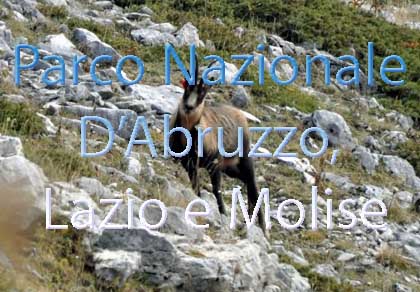
One of Italy’s most famous and oldest national parks
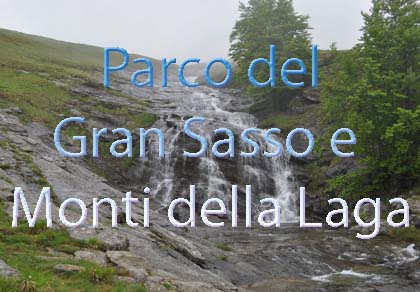
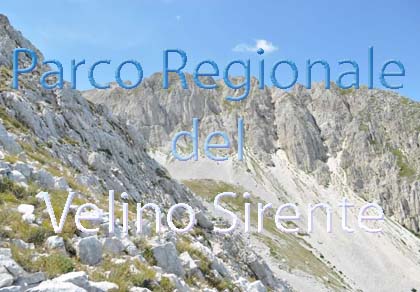
Located in the heart of the Apennines, home to the beautiful villages of the Rocche Plateau
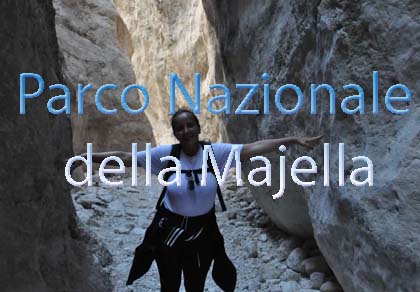
One of the snowiest places in Italy, a unique mountain massif rising close to the sea
Choose between sea or mountains, summer or winter, a sporty holiday or a relaxing one — Abruzzo has it all

Abruzzo is famous for its cuisine, both mountain and coastal, with traditions that vary from area to area
Walks, diving, climbing, mountain biking, horse riding — all outdoor activities available in Abruzzo

Rocca di Mezzo, Rocca di Cambio, Rovere, Terranera, Ovindoli

The Medieval Villages of the Gran Sasso, with their castles, towers, and ancient settlements that once dominated Abruzzo

The village of Cappadocia, in the western part of the Aquilan Abruzzo

The village of Casamaina, a favourite among skiers heading to Campo Felice or Ovindoli

The village of Castel del Monte, the highest settlement in the Gran Sasso area

The village of Civitella Alfedena, in the Abruzzo, Lazio and Molise National Park

Mountaineering on the Gran Sasso, the ideal place for freeride lovers seeking demanding routes

The city of L'Aquila, with its restored Renaissance palaces, a place rich in culture

The 2012 snowfall in L'Aquila brought over one metre of snow in 24 hours — unbelievable images

The village of Pescasseroli, heart of the Abruzzo, Lazio and Molise National Park

The village of Pietracamela, on the north-eastern side of the Gran Sasso, at the foot of Corno Piccolo — a magical and unexpected place

Prati di Tivo, a winter ski resort offering breathtaking views to all who visit

San Domenico and the Serpari ritual, held every first Thursday of May

The 2012 snowfall in Scoppito reached nearly two metres in height

The village of Opi, a splendid settlement in the Abruzzo, Lazio and Molise National Park



Punta Aderci, with the Abruzzese trabocchi stretching from Vasto through Fossacesia to San Vito Chietino


Lake Campotosto, nestled between the Gran Sasso and Monti della Laga ranges, within the national park of the same name

The Capodacqua reservoir, with submerged mills and crystal-clear waters, a paradise for divers

The swimming lake of Scanno, named after the village overlooking it — a place worth visiting

Lake Sinizzo, just a few kilometres from San Demetrio, is the ideal place for nature lovers seeking fresh, clear waters

Lake San Domenico, named after the nearby hermitage; its crystal-clear waters make it unique. Swimming not allowed

The Fountain of the 99 Spouts, a symbol of the city of L'Aquila

The Basilica of Santa Maria di Collemaggio, resting place of Pope Celestine V, the only pope buried outside Rome’s walls

The Sanctuary of Madonna d'Appari, set among the rocks along the road between Paganica and Assergi

The Church of San Panfilo, in the municipality of Tornimparte, with its frescoes — a place worth visiting

The Stiffe Caves, inside the Velino-Sirente Regional Park — a magical place to explore
A human-scale city between the highest peaks of the Apennines and the Adriatic. Roman remains in the heart of the centre, the Cathedral of San Berardo and one of the richest cuisines in Abruzzo.
Roman monuments, medieval churches and museums, almost all within a short walk of each other.
The cathedral was built by Bishop Guido II after the fire of 1156. Its façade combines a Romanesque lower part with a Gothic upper part; inside are the silver altar frontal by Nicola da Guardiagrele and the polyptych by Jacobello del Fiore. The bell tower is about 50 metres high.
Built in the early 1st century AD on the edge of ancient Interamnia, it was almost 77 metres across and seated about 2,500 people. Next to it are the remains of the amphitheatre, built between the late 1st and early 2nd century AD.
Under a steel-and-glass roof you can read four phases of the city: a Roman domus, a late-antique tower, the remains of the cathedral of Santa Maria Aprutiensis destroyed in 1156 and the chapel of Sant'Anna.
A Roman travertine bastion: its name ("burnt tower") comes from the marks of the 1156 fire, still visible on the south side.
The city's most important medieval noble palace, mentioned as early as 1232, with pointed-arch and mullioned windows. Floors of a Roman domus were found during its restoration.
Founded as a Benedictine convent before 1156 and rebuilt in Neo-Renaissance style between 1892 and 1900. It holds a 15th-century wooden statue of the Madonna attributed to Silvestro dell'Aquila and a cloister with 12th-century capitals.
In the Villa Comunale park, which began as a botanical garden in 1826, the gallery displays works from the 15th to the 19th century.
A Neo-Gothic castle on the San Venanzio hill, commissioned by the Teramo painter Gennaro Della Monica: begun in 1889 and completed in 1917, it now belongs to the town.
The heart of the city, between the cathedral, the Bishop's Palace and the arcades of Palazzo Costantini. Events and Christmas markets are held here.
Beneath the loggia of the Town Hall, with the Fountain of the Two Lions by Pasquale Morganti, representing the Tordino and Vezzola rivers.
The centre is divided into four districts and surrounded by the two rivers: everything can be visited on foot.
Walking and cycling paths along the rivers, with a cycle track reaching the necropolis and the Ponte Messato temple.
In less than an hour you go from the peaks of the Gran Sasso to the Adriatic beaches.
Teramo lies between the Gran Sasso massif and the coast, so it is easy to alternate a day in the mountains with a day at the sea.
About 40 km away: ski lifts in winter, hiking in summer and one of the loveliest villages at the foot of the Corno Grande. See Prati di Tivo.
Waterfalls and woods: the Cento Cascate hike is one of the most spectacular in the park.
Giulianova, Roseto degli Abruzzi, Pineto and the Torre del Cerrano reserve are about 25–35 km away.
Campli, with its Holy Stairs, Civitella del Tronto and its fortress, and Castelli, famous for its ceramics.
From short walks to a full day.
A university town, lively especially during the academic year.
The University of Teramo, founded in 1993, brings bars, wine bars and venues to the centre.
Religious traditions, sport and food.
International handball tournament with men's and women's teams from all over the world, held in the first week of July since 1972.
On the first of May restaurants and families cook virtù, the symbolic dish of spring in Teramo.
Feast of the sanctuary on 2 July.
The city's patron saint is celebrated on 19 December.
Teramo's cuisine is among the most elaborate in Abruzzo, tied to feasts and seasons.
The old town is compact and easy to explore on foot.
From the Praetutii to a university town.
Before the Romans the area was inhabited by the Praetutii; the name Aprutium, from which the word Abruzzo derives, is linked to this territory.
In Roman times the city was called Interamnia Praetuttiorum, "the city of the Praetutii between two rivers", the Tordino and the Vezzola. The theatre, the amphitheatre and the Torre Bruciata date from this period.
In 1156 the city was set on fire by the troops of the Count of Loritello; soon afterwards Bishop Guido II began building the new cathedral.
The University of Teramo was founded in 1993 and today gives the city a young spirit.
The most popular ski resorts, the updated snow report and useful information on how to find lifts or book accommodation for your winter holiday
Vai
View the webcams in Abruzzo and check real‑time weather conditions. Some webcams belong to www.abruzzoparchi.it, others are located throughout the region
Vai
Weather forecasts for the coming days in Abruzzo. Live weather via our webcams and temperatures recorded in several mountain areas
Vai
Maps for trekking, mountain biking, ski touring, running and horse riding. You can also download the GPX track of each route
Vai
Walks, diving, climbing, mountain biking, horse riding — all outdoor activities available in Abruzzo
Vai
Choose between sea or mountains, summer or winter, a sporty holiday or a relaxing one — Abruzzo has it all
Vai
Abruzzo is famous for its cuisine, both mountain and coastal, with traditions that vary from area to area
Vai
Abruzzo’s villages are famous for their fortresses, mountains and the traditional trabocchi along the southern coast
Vai
One of Italy’s most famous and oldest national parks
Vai
One of Italy’s wildest parks, with typical Apennine landscapes and Dolomite‑like peaks
Vai
Located in the heart of the Apennines, home to the beautiful villages of the Rocche Plateau
Vai
One of the snowiest places in Italy, a unique mountain massif rising close to the sea
Vai