
Skiing in Abruzzo – snow report
The most popular ski resorts, the updated snow report and useful information on how to find lifts or book accommodation for your winter holiday


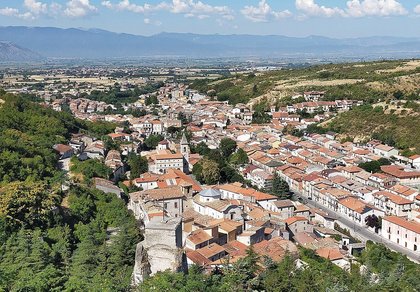
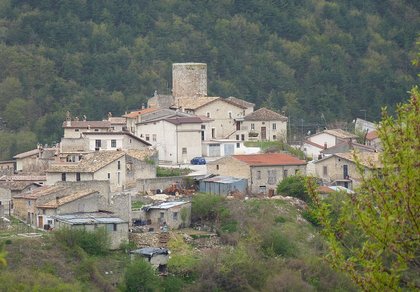
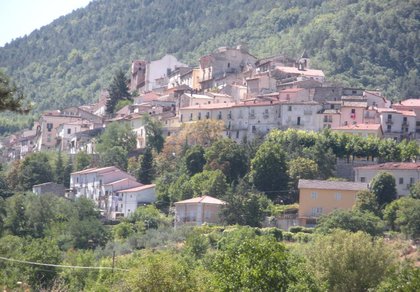
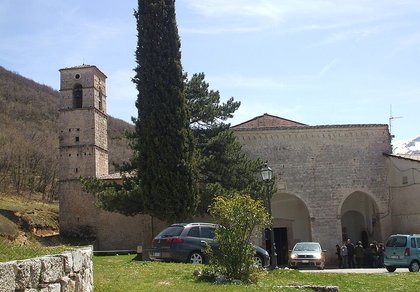
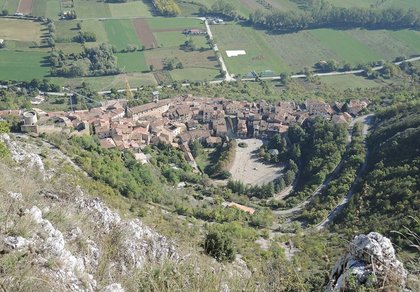
Fossa is a small village in the Aterno valley, south-east of L’Aquila, built inside a karst sinkhole at the foot of Monte Circolo: hence its name (fossa means pit). Above the houses stands the castle tower; just outside the village is Santa Maria ad Cryptas, a little church with one of the finest 13th-century fresco cycles in Abruzzo. On the plain, near the river, the Vestini necropolis tells three thousand years of history.
The most popular ski resorts, the updated snow report and useful information on how to find lifts or book accommodation for your winter holiday

View the webcams in Abruzzo and check real‑time weather conditions. Some webcams belong to www.abruzzoparchi.it, others are located throughout the region

Weather forecasts for the coming days in Abruzzo. Live weather via our webcams and temperatures recorded in several mountain areas
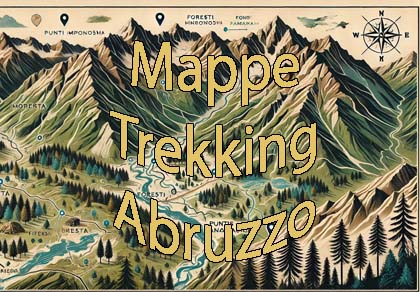
Maps for trekking, mountain biking, ski touring, running and horse riding. You can also download the GPX track of each route
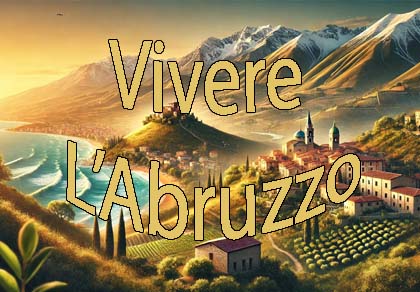
Abruzzo’s villages are famous for their fortresses, mountains and the traditional trabocchi along the southern coast
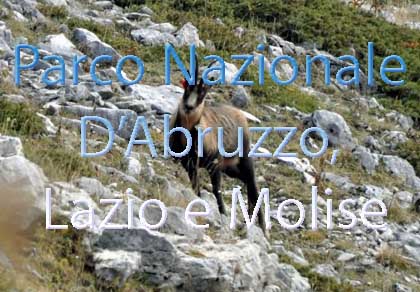
One of Italy’s most famous and oldest national parks
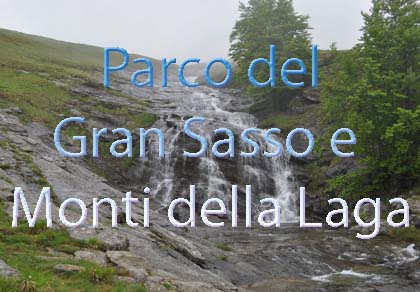
Located in the heart of the Apennines, home to the beautiful villages of the Rocche Plateau
One of the snowiest places in Italy, a unique mountain massif rising close to the sea
Choose between sea or mountains, summer or winter, a sporty holiday or a relaxing one — Abruzzo has it all

Abruzzo is famous for its cuisine, both mountain and coastal, with traditions that vary from area to area
Walks, diving, climbing, mountain biking, horse riding — all outdoor activities available in Abruzzo
About seven hundred people, a 12th-century castle, a church frescoed by Gentile da Rocca and a necropolis used from the 9th to the 3rd century BC. Above the village, on the slopes of Monte Circolo, are the convent of Sant’Angelo d’Ocre and the monastery of Santo Spirito.
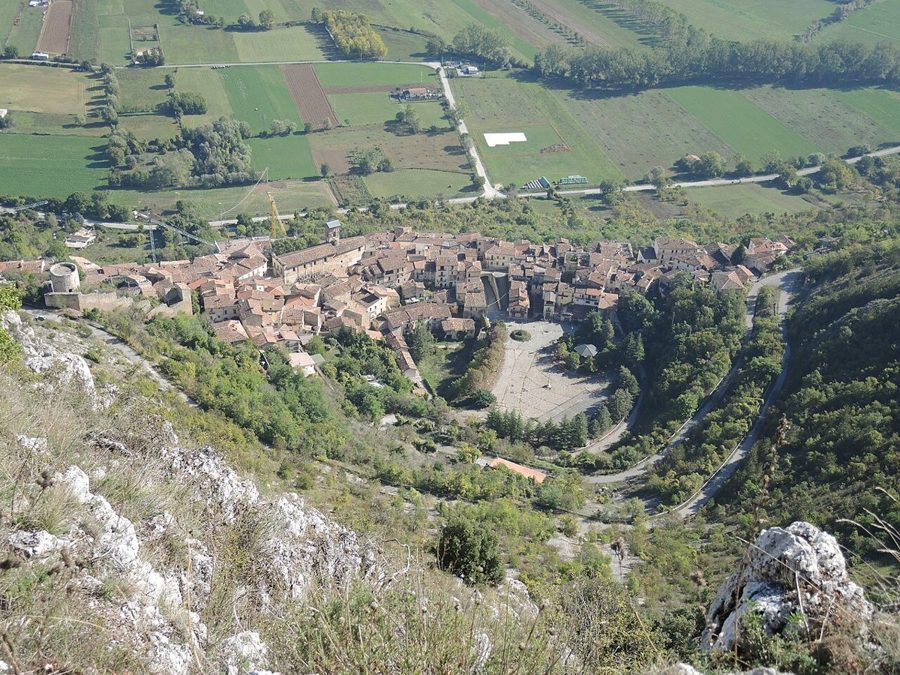
On the edge of the Aterno valley, between L’Aquila, Ocre, Poggio Picenze, Barisciano and Sant’Eusanio Forconese.
Fossa is built in a karst hollow on the eastern slopes of Monte Circolo, at 644 metres. The old village climbs in rings around the castle; lower down are its three hamlets: Le Chiuse, below Santa Maria ad Cryptas (in dialect «Pej la Madonna», at the feet of Our Lady), L’Osteria, named after an old inn on the road to L’Aquila, and Cerro, at the foot of the mountain of the same name.
The area was home to the Vestini, who had fortifications on Monte Cerro. In Roman times the plain was the site of Aveia, a Roman town and municipium: when the plain turned to marsh and the invasions came, the people moved up the hill and built the medieval village with the Roman stones, which can still be seen in the walls. Fossa is mentioned in a papal bull of 1204 and in 1269 it took part in the founding of L’Aquila. The earthquake of 6 April 2009 killed five people here and caused many collapses; the next day the village was the epicentre of a strong aftershock.
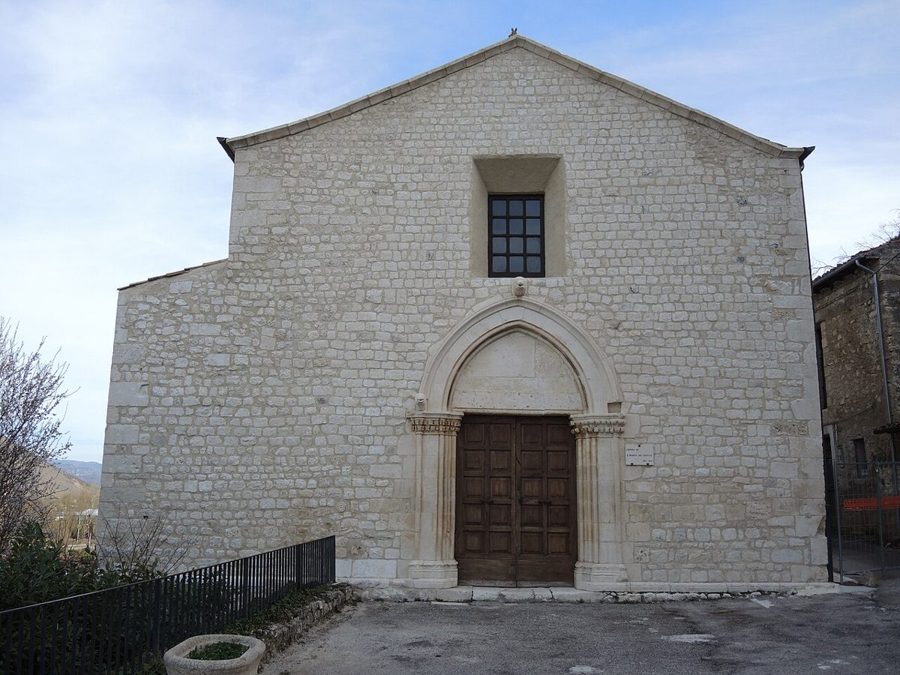
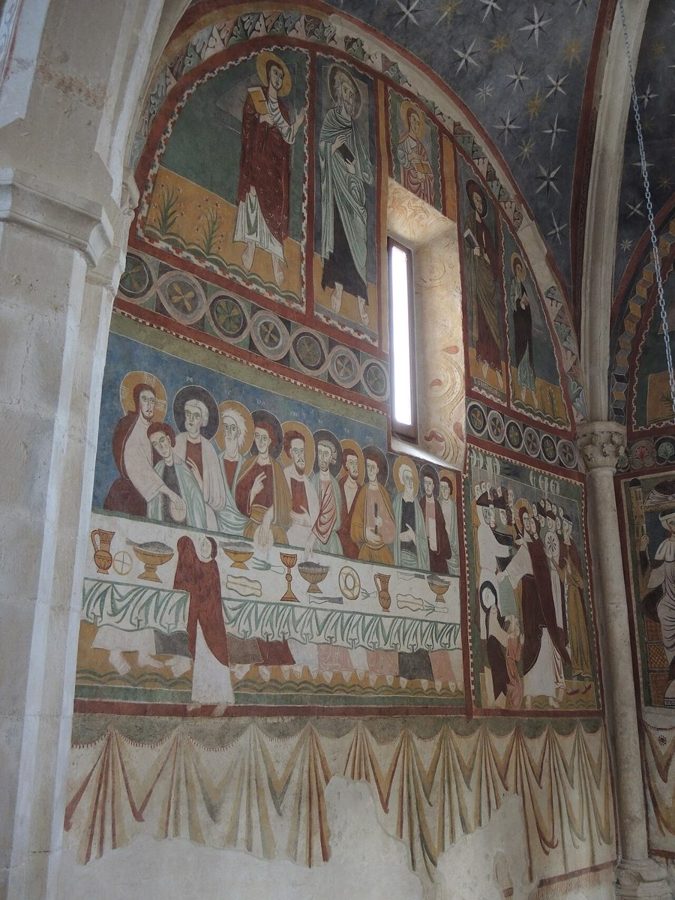
Just outside the village, it is the main reason to come to Fossa. From outside it is a simple stone church with a pointed-arch doorway; inside, the single nave is almost entirely covered with late 13th-century frescoes attributed to Gentile da Rocca: the stories of Genesis on the triumphal arch and the right wall, prophets and saints in niches, Saint George and Saint Martin on horseback, the months of the year with the work in the fields, the Passion of Christ in the presbytery and, on the entrance wall, a Last Judgement that is among the oldest in Abruzzo. The Deposition scene also shows the patron, the knight Guglielmo Amore, with his family. It belongs to the same school of painting as San Pellegrino in Bominaco.
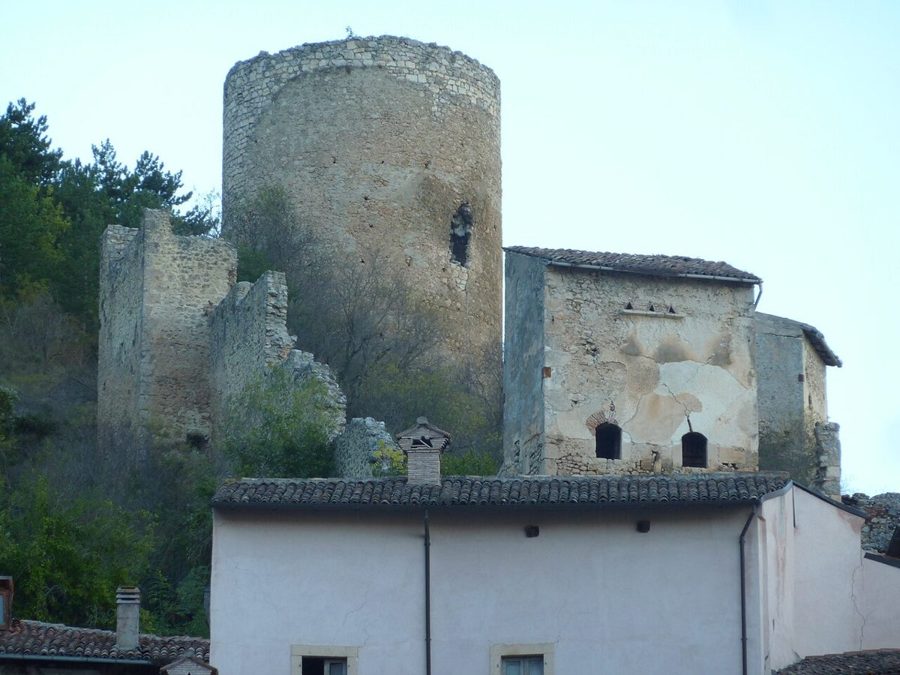
Built in the 12th century on a triangular plan, with a large cylindrical watchtower, it was destroyed in 1423 by Braccio da Montone and then damaged by the 1703 earthquake. Parts of the walls and the tower survive, dominating the village as its symbol.
Santa Maria Assunta, the parish church in piazza Belvedere, dates from the 13th century and was rebuilt in Baroque style after 1703: it has a square L’Aquila-style façade, a wooden ceiling and an 18th-century organ. San Clemente, in the countryside, is a 13th-century church with a gabled façade and a bell gable. In the village you can spot the 14th-century Campione tower house, with Gothic mullioned windows, and the Renaissance Casa Masci, with the sun of Saint Bernardino on its doorway.
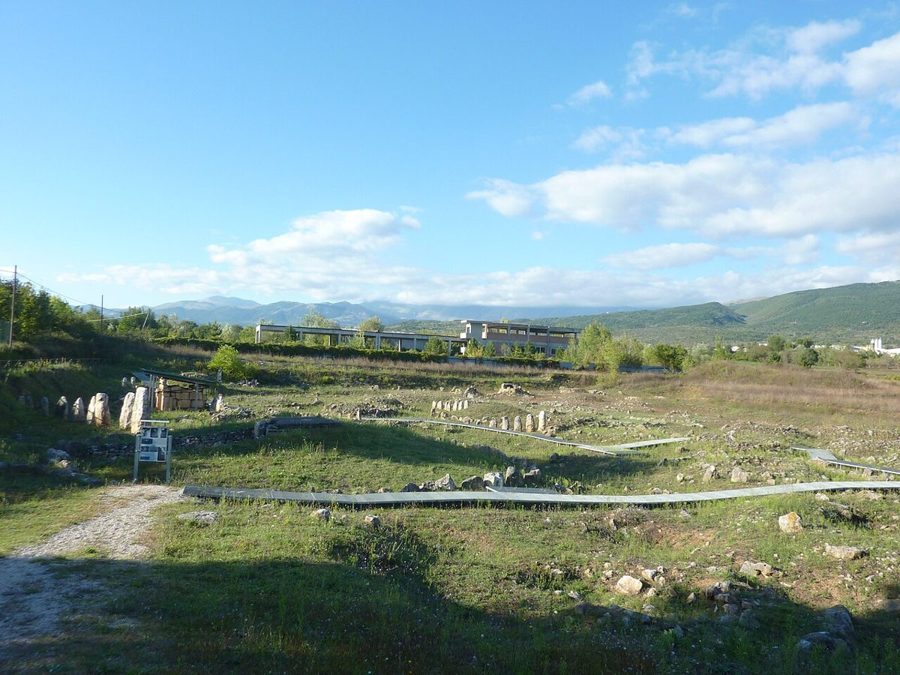
On the plain below the village, near the Aterno, lies the Vestini necropolis: the Vestini used it from the 9th to the 3rd century BC, when the Roman town of Aveia was already rising in the valley. The burial mounds are marked by circles of stones, still clearly visible in the meadows.
What remains of Aveia is mostly the stones reused in the village houses; after the 2009 earthquake, while unsafe buildings were being demolished, a Roman pedestrian street came to light.
Two of our routes around San Gregorio reach Fossa, with map, elevation profile, GPX and PDF sheet:
Above the village, on the slopes of Monte Circolo, are the hermitage of the Blessed Timoteo da Monticchio and Bernardino da Fossa and, in the municipality of Ocre, the convent of Sant’Angelo d’Ocre and the fortified monastery of Santo Spirito. Before walking up to the convent check whether it is open: Google Maps lists it as temporarily closed.
Besides the patron saint’s day and the religious feasts, in the first ten days of August the village associations hold the Sagra della bistecca, a steak festival. Dates and programmes change every year: check the Municipality’s website.
Fossa eats the food of the L’Aquila basin: grilled meat, from the festival steak to arrosticini and castrato (mutton), liver sausage, fregnacce. In the valley they grow L’Aquila saffron.
Bars, a restaurant, B&Bs, shops and churches in Fossa: open the list. For more choice, San Gregorio and the eastern districts of L’Aquila are a few minutes away.
🔎 Search all of Abruzzo · Data checked on Google Maps, Tripadvisor and the businesses’ websites.
From L’Aquila: the SS17 east to San Gregorio, then follow the signs for Fossa: about 18 km from the centre, around twenty minutes. From Rome: A24 motorway to L’Aquila, then the SS17: about 140 km. By bus: the regional lines along the Aterno valley; timetables on our transport page.
From 15 November to 15 April winter tyres or snow chains on board are required.
Fossa, at 644 m, is best visited all year round for the historic centre, in spring and autumn for the mild weather and from June to September for hiking and trails.
In the «Where to eat, sleep and what to find» box on this page: restaurants, hotels, B&Bs, bars, local produce shops, churches, monuments, huts and tourist offices, with a Google Maps link. All villages are also in the search by category.

Rocca di Mezzo, Rocca di Cambio, Rovere, Terranera, Ovindoli

The Medieval Villages of the Gran Sasso, with their castles, towers, and ancient settlements that once dominated Abruzzo

The village of Cappadocia, in the western part of the Aquilan Abruzzo

The village of Casamaina, a favourite among skiers heading to Campo Felice or Ovindoli

The village of Castel del Monte, the highest settlement in the Gran Sasso area

The village of Civitella Alfedena, in the Abruzzo, Lazio and Molise National Park

Mountaineering on the Gran Sasso, the ideal place for freeride lovers seeking demanding routes

The city of L'Aquila, with its restored Renaissance palaces, a place rich in culture

The 2012 snowfall in L'Aquila brought over one metre of snow in 24 hours — unbelievable images

The village of Pescasseroli, heart of the Abruzzo, Lazio and Molise National Park

The village of Pietracamela, on the north-eastern side of the Gran Sasso, at the foot of Corno Piccolo — a magical and unexpected place

Prati di Tivo, a winter ski resort offering breathtaking views to all who visit

San Domenico and the Serpari ritual, held every first Thursday of May

The 2012 snowfall in Scoppito reached nearly two metres in height

The village of Opi, a splendid settlement in the Abruzzo, Lazio and Molise National Park





Punta Aderci, with the Abruzzese trabocchi stretching from Vasto through Fossacesia to San Vito Chietino


Lake Campotosto, nestled between the Gran Sasso and Monti della Laga ranges, within the national park of the same name

The Capodacqua reservoir, with submerged mills and crystal-clear waters, a paradise for divers

The swimming lake of Scanno, named after the village overlooking it — a place worth visiting

Lake Sinizzo, just a few kilometres from San Demetrio, is the ideal place for nature lovers seeking fresh, clear waters

Lake San Domenico, named after the nearby hermitage; its crystal-clear waters make it unique. Swimming not allowed

The Fountain of the 99 Spouts, a symbol of the city of L'Aquila

The Basilica of Santa Maria di Collemaggio, resting place of Pope Celestine V

The Sanctuary of Madonna d'Appari, set among the rocks along the road between Paganica and Assergi

The Church of San Panfilo, in the municipality of Tornimparte, with its frescoes — a place worth visiting

The Stiffe Caves, inside the Velino-Sirente Regional Park — a magical place to explore
The most popular ski resorts, the updated snow report and useful information on how to find lifts or book accommodation for your winter holiday
Vai
View the webcams in Abruzzo and check real‑time weather conditions. Some webcams belong to www.abruzzoparchi.it, others are located throughout the region
Vai
Weather forecasts for the coming days in Abruzzo. Live weather via our webcams and temperatures recorded in several mountain areas
Vai
Maps for trekking, mountain biking, ski touring, running and horse riding. You can also download the GPX track of each route
Vai
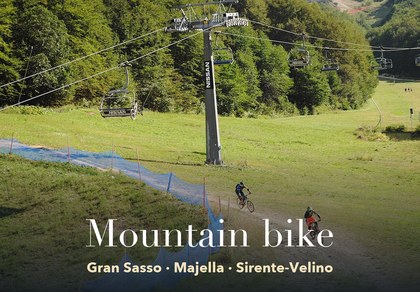
Walks, diving, climbing, mountain biking, horse riding — all outdoor activities available in Abruzzo
Vai
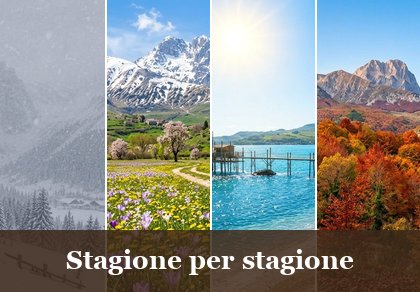
Choose between sea or mountains, summer or winter, a sporty holiday or a relaxing one — Abruzzo has it all
Vai
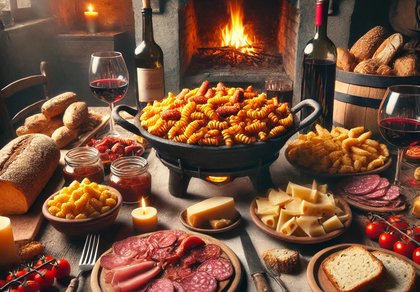
Abruzzo is famous for its cuisine, both mountain and coastal, with traditions that vary from area to area
Vai
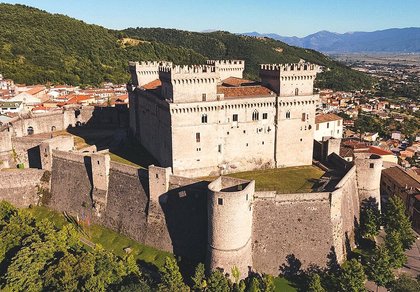
Abruzzo’s villages are famous for their fortresses, mountains and the traditional trabocchi along the southern coast
Vai
One of Italy’s most famous and oldest national parks
Vai
One of Italy’s wildest parks, with typical Apennine landscapes and Dolomite‑like peaks
Vai
Located in the heart of the Apennines, home to the beautiful villages of the Rocche Plateau
Vai
One of the snowiest places in Italy, a unique mountain massif rising close to the sea
Vai