
Skiing in Abruzzo – snow report
The most popular ski resorts, the updated snow report and useful information on how to find lifts or book accommodation for your winter holiday


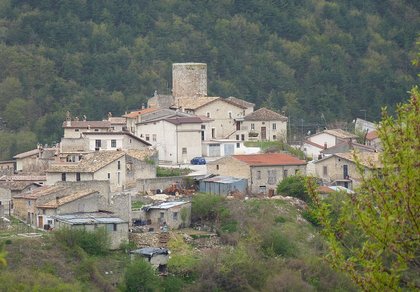
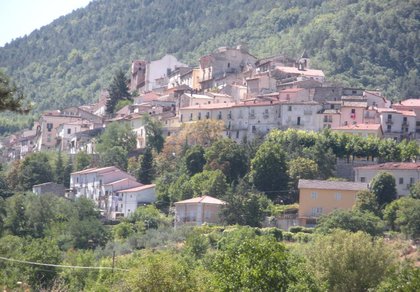
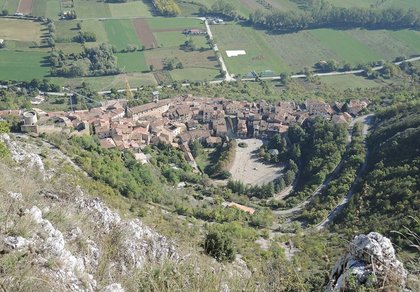
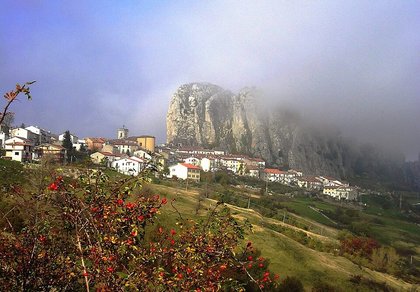
Pizzoferrato and Gamberale are the two highest villages in the province of Chieti, five kilometres apart, in the mountains between the Sangro valley and the Majella. Pizzoferrato leans against the «Pizzi», limestone rocks rising above the houses; Gamberale, the highest municipality in the province, looks down the valley towards Ateleta and Castel di Sangro. The ski lifts have been closed for years: in winter people come here for cross-country skiing, ski touring and snowshoeing; in summer for the woods, the trails and the cool air.
The most popular ski resorts, the updated snow report and useful information on how to find lifts or book accommodation for your winter holiday

View the webcams in Abruzzo and check real‑time weather conditions. Some webcams belong to www.abruzzoparchi.it, others are located throughout the region

Weather forecasts for the coming days in Abruzzo. Live weather via our webcams and temperatures recorded in several mountain areas
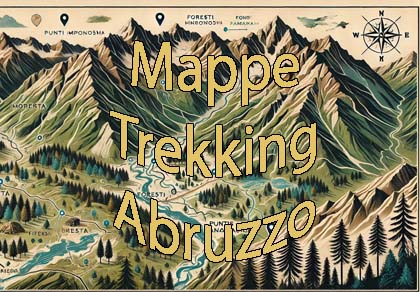
Maps for trekking, mountain biking, ski touring, running and horse riding. You can also download the GPX track of each route
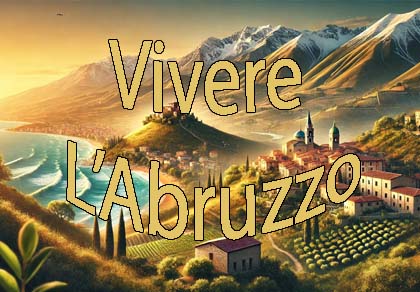
Abruzzo’s villages are famous for their fortresses, mountains and the traditional trabocchi along the southern coast
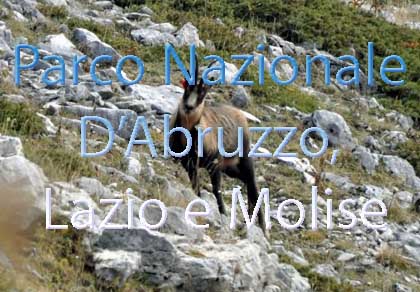
One of Italy’s most famous and oldest national parks
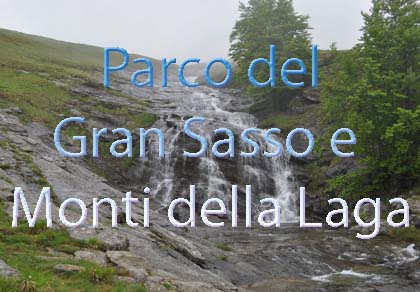
Located in the heart of the Apennines, home to the beautiful villages of the Rocche Plateau
One of the snowiest places in Italy, a unique mountain massif rising close to the sea
Choose between sea or mountains, summer or winter, a sporty holiday or a relaxing one — Abruzzo has it all

Abruzzo is famous for its cuisine, both mountain and coastal, with traditions that vary from area to area
Walks, diving, climbing, mountain biking, horse riding — all outdoor activities available in Abruzzo
Two small villages above 1,200 metres, inside the Majella National Park. Gamberale castle and Pizzoferrato’s ducal palace, churches on the rock, endless beech woods and the Valle del Sole plain, where in winter you ski on the flat.
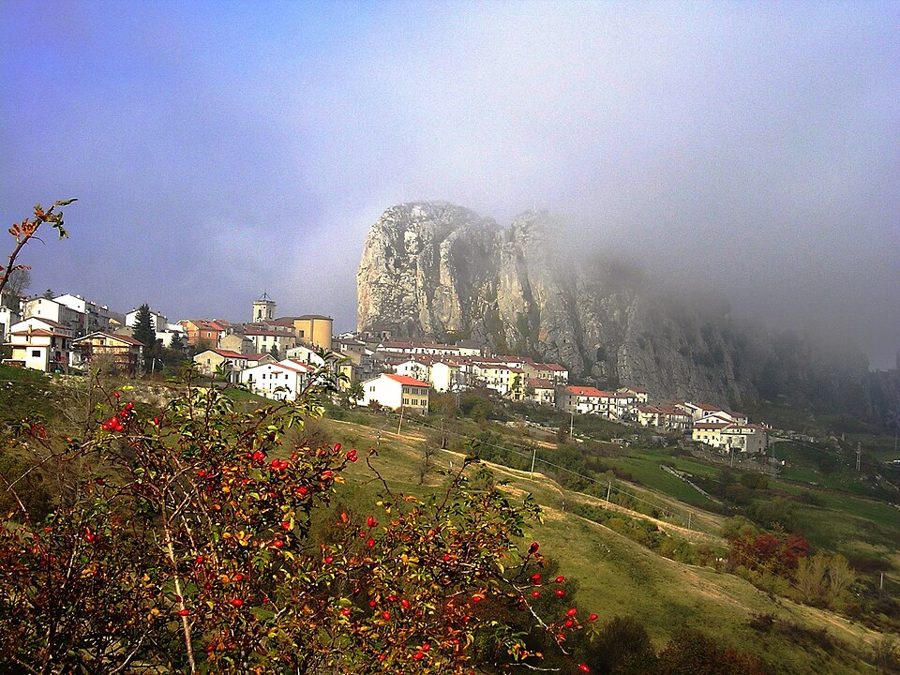
On the southern edge of the province of Chieti, above the Sangro valley, between Ateleta, Quadri, Montenerodomo and Rosello.
Pizzoferrato and Gamberale sit on a rolling upland of pastures and beech woods, between the Monti Pizzi and Monte Secine, the highest peak in the area. It is a gentle mountain landscape, with few cliffs and plenty of forest: in winter the snow lasts a long time, in summer it stays cool even in August.
Both municipalities lie within the Majella National Park and share the Natura 2000 site «Monti Pizzi – Monte Secine», protected for its beech woods, high pastures and wildlife. A few kilometres east is the Abetina di Rosello, one of the finest silver fir forests in the Apennines.
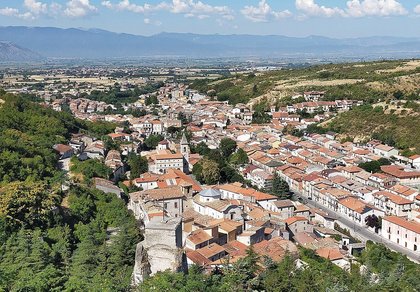
Pizzoferrato takes its name from the Pizzi, limestone rocks that rise among the houses like natural towers. It has about 950 inhabitants and three hamlets: Collalto, Castiglione and Turchi. The ducal palace occupies the old 16th-century baronial castle, of which two round towers survive. During the Second World War the village was on the Gustav Line and was awarded the bronze medal for military valour.
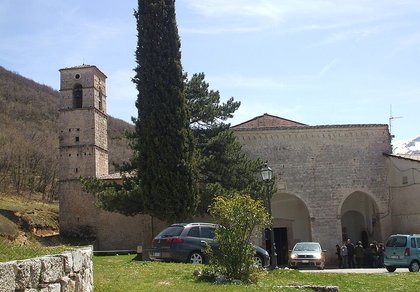
The Madonna del Girone is the oldest church, from the 11th century, built on the rock at the top of the village. San Rocco, from the 19th century, faces the square with the Pizzi behind it. Outside the village, under a cliff in the middle of the woods, stands San Domenico in Silvis, built between 1921 and 1923 in front of the cave where the hermit saint lived.
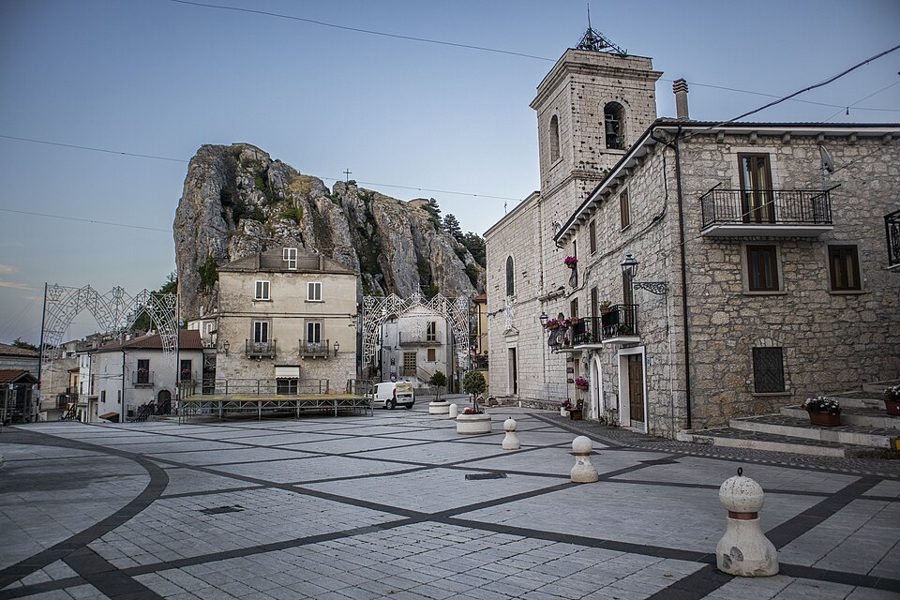
Bruno Sammartino was born in Pizzoferrato on 6 October 1935; he emigrated to the United States as a boy and became a wrestling legend, WWWF world champion for almost eight years in a row. There is a statue of him in the village, and a monument is also dedicated to Amelio De Iuliis.
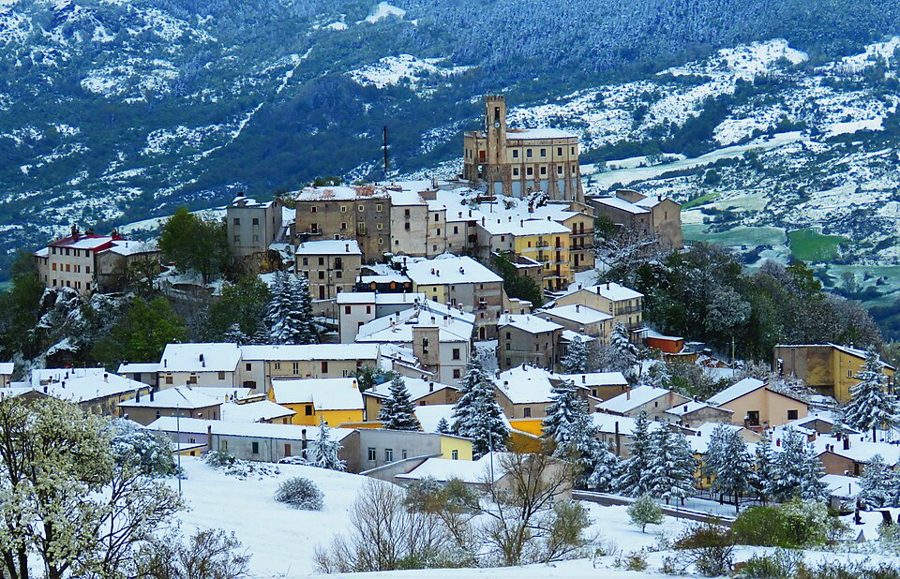
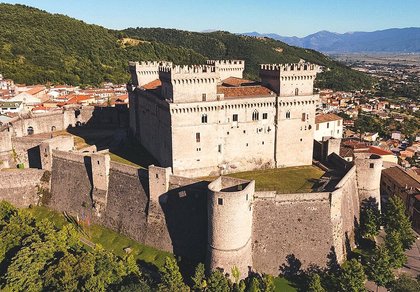
Gamberale, about 260 inhabitants, is the highest municipality in the province of Chieti: the town hall stands at 1,343 metres. It is mentioned as early as 1063 as Gambarum in Valva. At the top of the village is the castle, built in the 13th century as a watchtower over the Sangro valley, restored in 1881 and again after the Second World War and the 1984 earthquake.
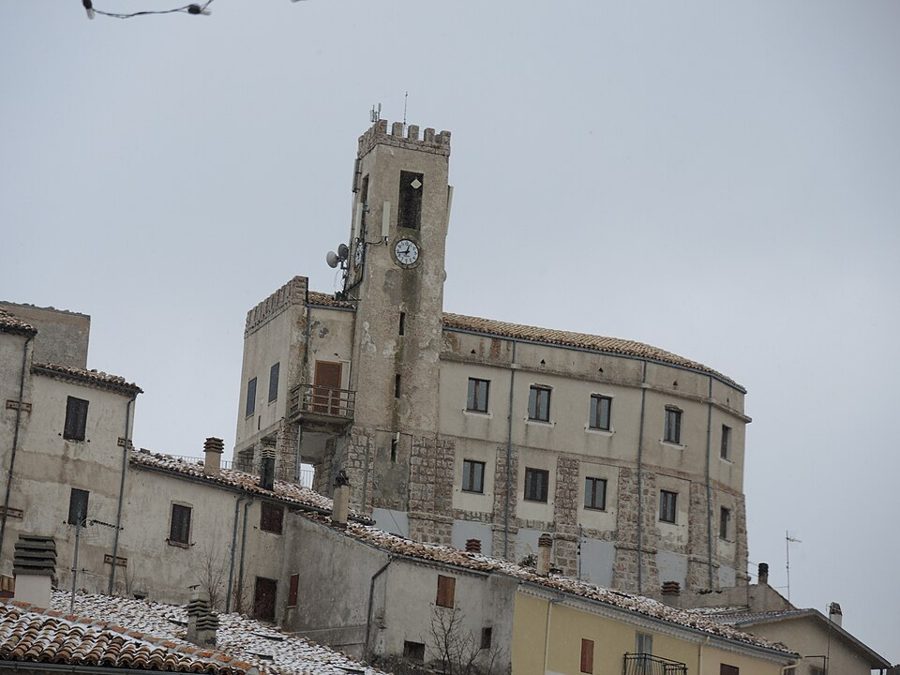
The parish church of San Lorenzo Martire dates from the 18th century; 10 August is the feast of the patron saint. Around the village there are four fountains by the Lithuanian sculptor Antanas Kmieliauskas, and at Passo della Forcella a monument honours the Alpine troops.
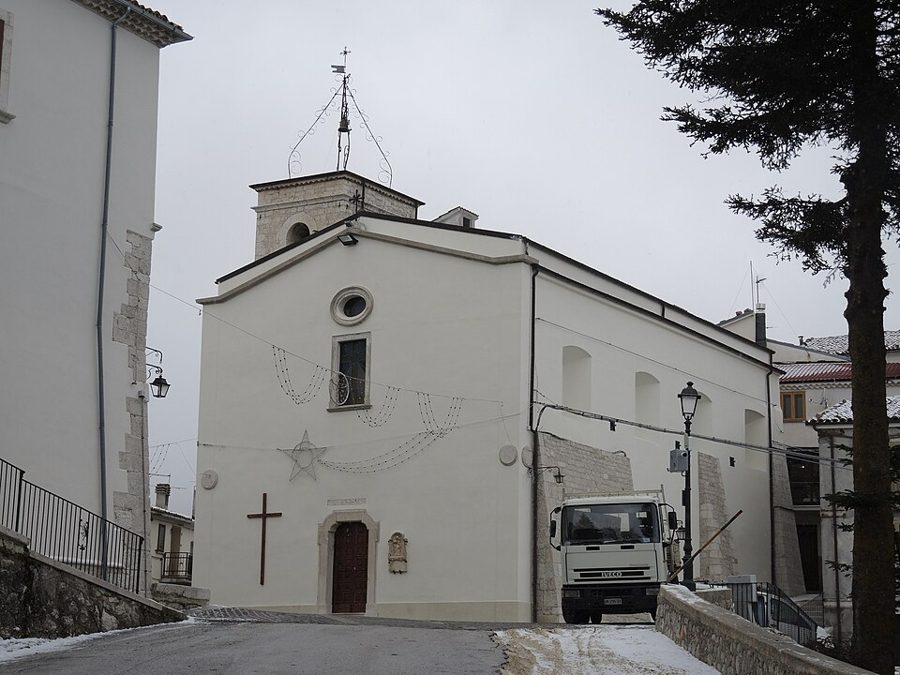
In the winter of 1943-44 Gamberale was on the Gustav Line: the village was destroyed and almost two hundred civilians lost their lives. Most of the houses you see today were rebuilt after the war.
The ski lifts have been closed for years: here you enjoy the snow without lifts.
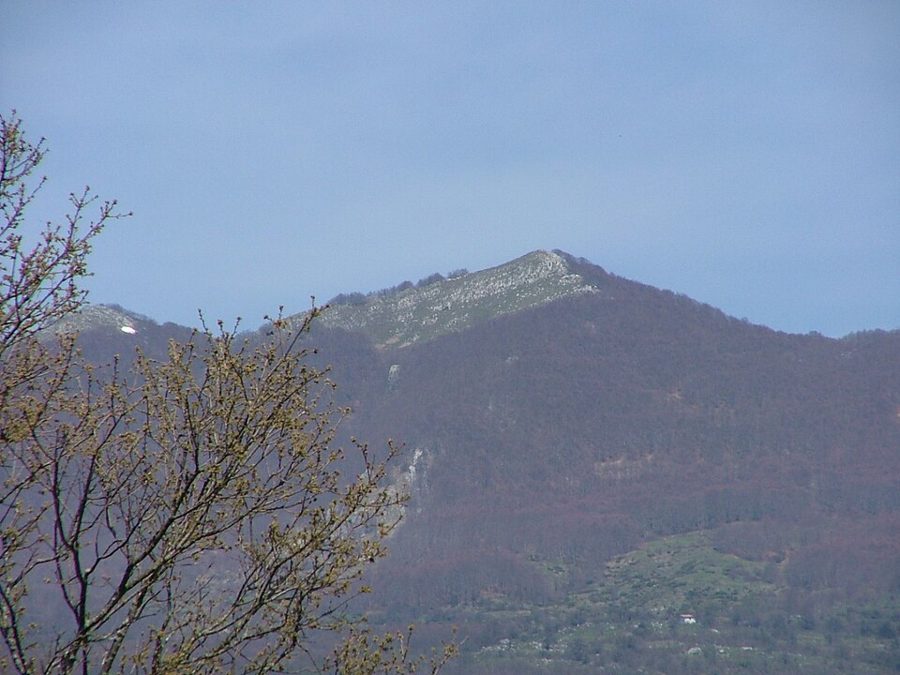
The «Pizzoferrato – Gamberale» resort had two small ski areas: the Valle del Sole chairlift, below Pizzoferrato, never really got going, and the Forcella ski lift above Gamberale has been idle since 1999. For downhill skiing the nearest slopes are at Roccaraso, half an hour’s drive away.
The Valle del Sole plain, below Pizzoferrato, is the right place for cross-country skiing: when there is enough snow, easy loops are groomed between the meadows and the woods, suitable for beginners too, and locally you can find equipment hire and lessons. Grooming and opening depend on the snow: ask in the village or at the town hall before you go.
The ridges of the Monti Pizzi and Monte Secine offer open slopes and sparse woods, good for intermediate ski tours. You skin up from the villages or from Passo della Forcella. Always carry a transceiver, shovel and probe, check the Meteomont avalanche bulletin and read our mountain safety page. More ideas on the ski touring in Abruzzo page.
The beech woods around the villages, the Valle del Sole plain and the trail to Coll’Alto and Monte San Domenico (see «Hikes») are perfect for snowshoeing, with little danger and wide views of the Majella. More snowshoe routes on the snowshoeing in Abruzzo page.
Our route in the area, with map, elevation profile, GPX and PDF sheet:
Don’t miss the Abetina di Rosello either, with its trails among the silver firs, and the hikes of the Majella Park. More routes in the area are coming soon.
A 28.3 km loop with 1,007 metres of ascent, between 993 and 1,322 metres, with map, GPX and PDF sheet: Gamberale – Montenerodomo – Pizzoferrato. About three quarters of the ride is on quiet asphalt roads (SP164 and SP132): a gravel bike works well too.
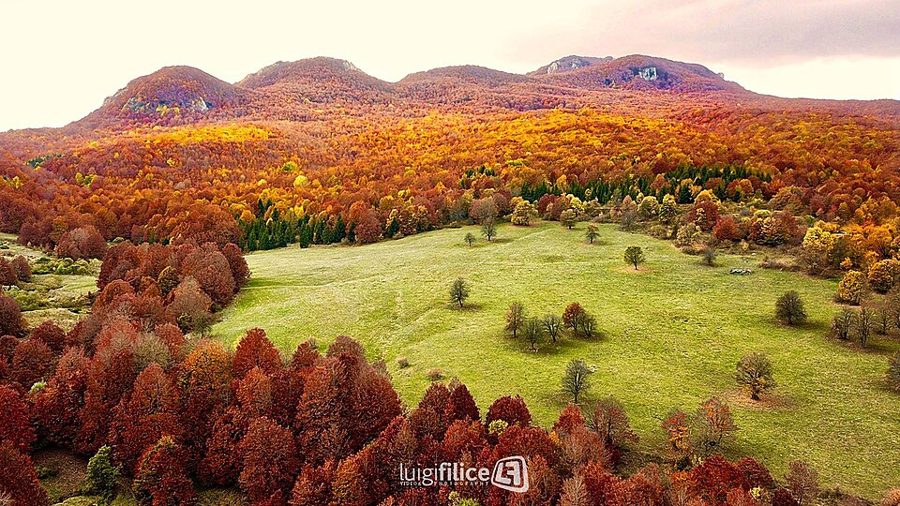
More than half of Gamberale’s territory lies in the Majella National Park; Pizzoferrato is also one of the park’s municipalities. Beech woods cover most of the Monti Pizzi: in autumn they turn red and gold, and in September and October you can hear the red deer rut. Roe deer and wolves also live in the woods.
The other villages of the park are on the Majella National Park villages page.
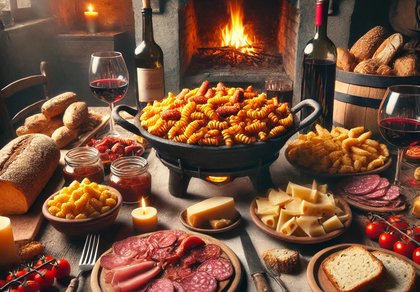
Here you eat the shepherds’ food of the Alto Sangro: pecora alla callara (mutton stew), sagne e ceci (pasta with chickpeas), lamb with cheese and egg, caciocavallo and sheep’s cheeses. Mountain potatoes from the Medio Sangro grow on the uplands. In autumn mushrooms and truffles from the woods appear on the menus.
Restaurants, farm stays, B&Bs, holiday homes, shops, churches and monuments in the two villages: open the lists.
🔎 Search all of Abruzzo · Data checked on Google Maps, Tripadvisor and the businesses’ websites.
🔎 Search all of Abruzzo · Data checked on Google Maps, Tripadvisor and the businesses’ websites.
From the Adriatic coast: A14 motorway to the Val di Sangro exit, then the Fondovalle Sangro (SS652) towards Castel di Sangro as far as the Quadri – Gamberale exit: about 95 km from Pescara, an hour and a half. From Rome: A24 and A25 to Pratola Peligna, then Sulmona, Roccaraso and Castel di Sangro, and the SS652 towards Ateleta: about 205 km. Pizzoferrato and Gamberale are about 5 km apart.
From 15 November to 15 April winter tyres or snow chains on board are required: in winter the roads to both villages are often snowy.
Pizzoferrato, at 1.251 m, is best visited in winter for cross-country skiing on the plateau, in winter for snow and snowshoeing, from June to September for hiking and trails and in autumn for the colours of the woods. From 15 November to 15 April winter tyres or snow chains on board are required.
Gamberale, at 1.343 m, is best visited in winter for snow and snowshoeing, from June to September for hiking and trails and in September and October for the red deer rut. From 15 November to 15 April winter tyres or snow chains on board are required.
No: the Valle del Sole chairlift never really got going and the Forcella ski lift has been idle since 1999. In winter people come here for cross-country skiing, ski touring and snowshoeing; for downhill skiing the nearest slopes are at Roccaraso, about half an hour away.
Yes: the trail from Pizzoferrato to Coll’Alto and Monte San Domenico (5.8 km, 322 m of ascent, E) and the mountain bike loop Gamberale – Montenerodomo – Pizzoferrato (28.3 km, 1,007 m of ascent, mostly on asphalt), both with GPX and PDF.
In the «Where to eat, sleep and what to find» box on this page, with one list for Pizzoferrato and one for Gamberale: restaurants, hotels, B&Bs, bars, local produce shops, churches, monuments, huts and tourist offices, with a Google Maps link. All villages are also in the search by category.

Rocca di Mezzo, Rocca di Cambio, Rovere, Terranera, Ovindoli

The Medieval Villages of the Gran Sasso, with their castles, towers, and ancient settlements that once dominated Abruzzo

The village of Cappadocia, in the western part of the Aquilan Abruzzo

The village of Casamaina, a favourite among skiers heading to Campo Felice or Ovindoli

The village of Castel del Monte, the highest settlement in the Gran Sasso area

The village of Civitella Alfedena, in the Abruzzo, Lazio and Molise National Park

Mountaineering on the Gran Sasso, the ideal place for freeride lovers seeking demanding routes

The city of L'Aquila, with its restored Renaissance palaces, a place rich in culture

The 2012 snowfall in L'Aquila brought over one metre of snow in 24 hours — unbelievable images

The village of Pescasseroli, heart of the Abruzzo, Lazio and Molise National Park

The village of Pietracamela, on the north-eastern side of the Gran Sasso, at the foot of Corno Piccolo — a magical and unexpected place

Prati di Tivo, a winter ski resort offering breathtaking views to all who visit

San Domenico and the Serpari ritual, held every first Thursday of May

The 2012 snowfall in Scoppito reached nearly two metres in height

The village of Opi, a splendid settlement in the Abruzzo, Lazio and Molise National Park





Punta Aderci, with the Abruzzese trabocchi stretching from Vasto through Fossacesia to San Vito Chietino


Lake Campotosto, nestled between the Gran Sasso and Monti della Laga ranges, within the national park of the same name

The Capodacqua reservoir, with submerged mills and crystal-clear waters, a paradise for divers

The swimming lake of Scanno, named after the village overlooking it — a place worth visiting

Lake Sinizzo, just a few kilometres from San Demetrio, is the ideal place for nature lovers seeking fresh, clear waters

Lake San Domenico, named after the nearby hermitage; its crystal-clear waters make it unique. Swimming not allowed

The Fountain of the 99 Spouts, a symbol of the city of L'Aquila

The Basilica of Santa Maria di Collemaggio, resting place of Pope Celestine V

The Sanctuary of Madonna d'Appari, set among the rocks along the road between Paganica and Assergi

The Church of San Panfilo, in the municipality of Tornimparte, with its frescoes — a place worth visiting

The Stiffe Caves, inside the Velino-Sirente Regional Park — a magical place to explore
The most popular ski resorts, the updated snow report and useful information on how to find lifts or book accommodation for your winter holiday
Vai
View the webcams in Abruzzo and check real‑time weather conditions. Some webcams belong to www.abruzzoparchi.it, others are located throughout the region
Vai
Weather forecasts for the coming days in Abruzzo. Live weather via our webcams and temperatures recorded in several mountain areas
Vai
Maps for trekking, mountain biking, ski touring, running and horse riding. You can also download the GPX track of each route
Vai
Walks, diving, climbing, mountain biking, horse riding — all outdoor activities available in Abruzzo
Vai
Choose between sea or mountains, summer or winter, a sporty holiday or a relaxing one — Abruzzo has it all
Vai
Abruzzo is famous for its cuisine, both mountain and coastal, with traditions that vary from area to area
Vai
Abruzzo’s villages are famous for their fortresses, mountains and the traditional trabocchi along the southern coast
Vai
One of Italy’s most famous and oldest national parks
Vai
One of Italy’s wildest parks, with typical Apennine landscapes and Dolomite‑like peaks
Vai
Located in the heart of the Apennines, home to the beautiful villages of the Rocche Plateau
Vai
One of the snowiest places in Italy, a unique mountain massif rising close to the sea
Vai