
Skiing in Abruzzo – snow report
The most popular ski resorts, the updated snow report and useful information on how to find lifts or book accommodation for your winter holiday


Sagne are the simplest pasta of the Abruzzo mountains: just flour and water, rolled by hand and cut into irregular pieces, the «pezzate». Cooked with chickpeas they become a humble, warming and very tasty first course.
The most popular ski resorts, the updated snow report and useful information on how to find lifts or book accommodation for your winter holiday
View the webcams in Abruzzo and check real‑time weather conditions. Some webcams belong to www.abruzzoparchi.it, others are located throughout the region

Weather forecasts for the coming days in Abruzzo. Live weather via our webcams and temperatures recorded in several mountain areas
Maps for trekking, mountain biking, ski touring, running and horse riding. You can also download the GPX track of each route
Abruzzo’s villages are famous for their fortresses, mountains and the traditional trabocchi along the southern coast
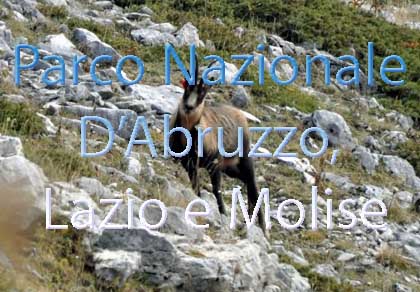
One of Italy’s most famous and oldest national parks
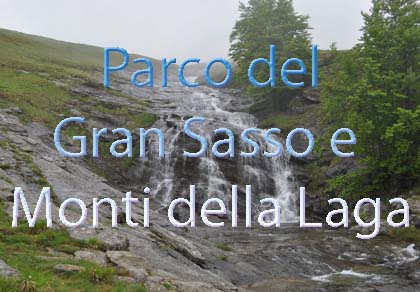
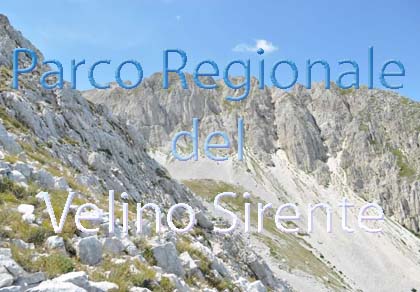
Located in the heart of the Apennines, home to the beautiful villages of the Rocche Plateau
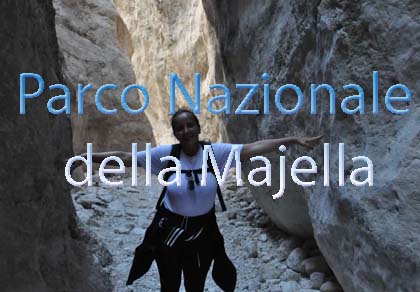
One of the snowiest places in Italy, a unique mountain massif rising close to the sea
Choose between sea or mountains, summer or winter, a sporty holiday or a relaxing one — Abruzzo has it all

Abruzzo is famous for its cuisine, both mountain and coastal, with traditions that vary from area to area
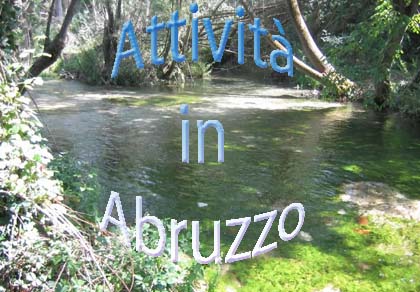
Walks, diving, climbing, mountain biking, horse riding — all outdoor activities available in Abruzzo

Leg of lamb roasted with potatoes, garlic and rosemary: the holiday lunch.

Lamb stew finished with egg and lemon, the Easter dish of L’Aquila.

Castrato mutton chops on the grill, a home favourite around L’Aquila.

Egg pasta cut on the «chitarra», Abruzzo’s traditional wire frame.

Egg fettuccine with poplar and field mushrooms picked in autumn.

Homemade potato gnocchi with castrato mutton ragù, the L’Aquila way.

Pescara’s Christmas cake: almonds, semolina and a dark chocolate coating.

Sweet anise rings from the Chieti area, first boiled and then baked.

Little squares of egg pasta cooked in meat broth: comfort food for winter evenings.

Leavened potato rings, fried and sugared, made for St Joseph’s Day in L’Aquila.

Mutton skewers grilled over embers, the symbol of Abruzzo cooking.

Fried dough balls bound with honey: the Carnival sweet of Abruzzo.

Homemade flour-and-water pasta cut into pieces and cooked with chickpeas: a humble, tasty mountain first course.
An egg-free pasta sheet cut into irregular pieces and cooked in chickpea broth, with garlic, rosemary, a drizzle of oil and a pinch of chilli: the first course of mountain homes.
The egg-free pasta of peasant tradition.
Sagne are a homemade pasta made with flour and water, without eggs. The sheet is rolled by hand, not too thin, and cut with a knife into irregular pieces: hence the name sagne «a pezzate» («in pieces»). Every family cuts them its own way, into diamonds, squares or short strips.
With chickpeas they make a one-dish meal, halfway between a soup and a pasta dish: the pasta cooks directly in the chickpea broth and soaks up its flavour, while the starch makes everything creamy.
It is a dish of the province of L’Aquila and inland Abruzzo, made above all in the cold months. Around Pescara there is a very similar version with beans, sagne e fagioli.
Serves 4.
For the sagne
For the chickpeas
Tap a photo to enlarge it.


We do not have photos of this dish yet: the images are illustrations made for this page.
Pasta and pulses have always been the basis of peasant cooking in the Apennines: humble ingredients that keep all winter and give energy for work in the fields and with the flocks.
The name «sagne» is found in many parts of central and southern Italy for homemade flour-and-water pasta; in Abruzzo sagne are paired with chickpeas, beans, lentils and grass peas.
Il nostro menù con l'elenco dei nostri collegamenti rapidi.
The most popular ski resorts, the updated snow report and useful information on how to find lifts or book accommodation for your winter holiday
Vai
View the webcams in Abruzzo and check real‑time weather conditions. Some webcams belong to www.abruzzoparchi.it, others are located throughout the region
Vai
Weather forecasts for the coming days in Abruzzo. Live weather via our webcams and temperatures recorded in several mountain areas
Vai
Maps for trekking, mountain biking, ski touring, running and horse riding. You can also download the GPX track of each route
Vai
Walks, diving, climbing, mountain biking, horse riding — all outdoor activities available in Abruzzo
Vai
Choose between sea or mountains, summer or winter, a sporty holiday or a relaxing one — Abruzzo has it all
Vai
Abruzzo is famous for its cuisine, both mountain and coastal, with traditions that vary from area to area
Vai
Abruzzo’s villages are famous for their fortresses, mountains and the traditional trabocchi along the southern coast
Vai
One of Italy’s most famous and oldest national parks
Vai
One of Italy’s wildest parks, with typical Apennine landscapes and Dolomite‑like peaks
Vai
Located in the heart of the Apennines, home to the beautiful villages of the Rocche Plateau
Vai
One of the snowiest places in Italy, a unique mountain massif rising close to the sea
Vai