
Skiing in Abruzzo – snow report
The most popular ski resorts, the updated snow report and useful information on how to find lifts or book accommodation for your winter holiday


In the basin of the river Vera, on the edge of L’Aquila, climbing beans supported by willow poles have been grown for centuries. Two varieties, the «a pane» bean and the white one, short cooking and full flavour: here is how they are grown, how to cook them and whom to ask.
The most popular ski resorts, the updated snow report and useful information on how to find lifts or book accommodation for your winter holiday

View the webcams in Abruzzo and check real‑time weather conditions. Some webcams belong to www.abruzzoparchi.it, others are located throughout the region

Weather forecasts for the coming days in Abruzzo. Live weather via our webcams and temperatures recorded in several mountain areas
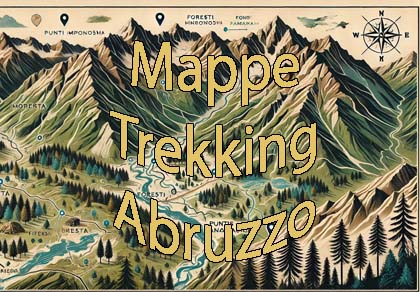
Maps for trekking, mountain biking, ski touring, running and horse riding. You can also download the GPX track of each route
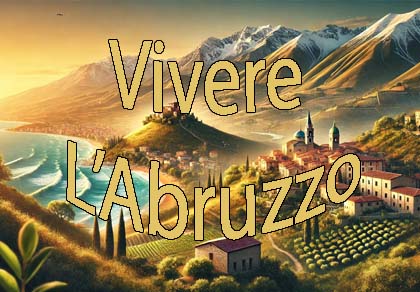
Abruzzo’s villages are famous for their fortresses, mountains and the traditional trabocchi along the southern coast
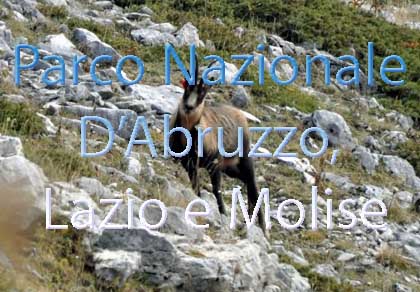
One of Italy’s most famous and oldest national parks
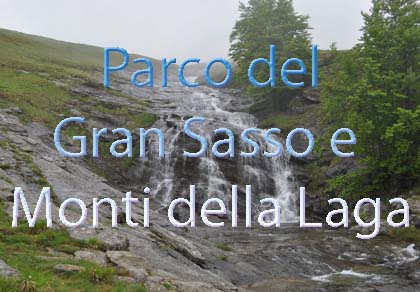
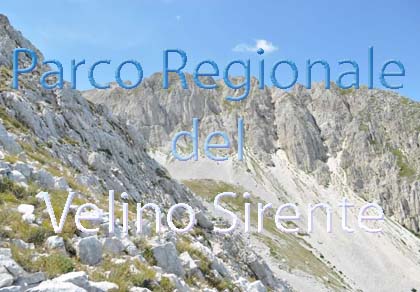
Located in the heart of the Apennines, home to the beautiful villages of the Rocche Plateau
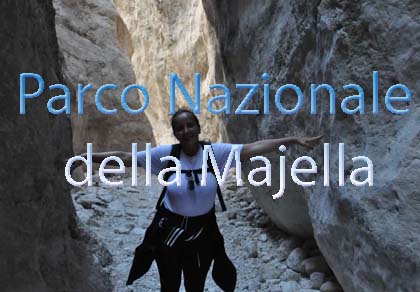
One of the snowiest places in Italy, a unique mountain massif rising close to the sea
Choose between sea or mountains, summer or winter, a sporty holiday or a relaxing one — Abruzzo has it all

Abruzzo is famous for its cuisine, both mountain and coastal, with traditions that vary from area to area
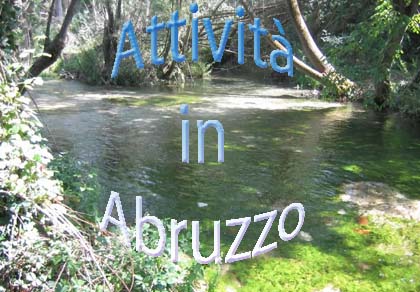
Walks, diving, climbing, mountain biking, horse riding — all outdoor activities available in Abruzzo

The red gold of the Navelli plateau: stigmas picked at dawn and dried over embers.

Tiny and dark, grown above 1,200 metres below the Gran Sasso: a Slow Food Presidium.

The ancient «pebble» pulse of the Baronia, between chickpea and lentil, for soups and fracchiata.

Climbing beans from the Vera basin, «a pane» and white: a Slow Food Presidium.

Red-purple skins, intense flavour and traditional braids from the Valle Peligna.

Potatoes and carrots from the reclaimed Fucino plain, two Abruzzo PGIs.

Sheep’s cheese from the Campo Imperatore pastures, aged in cellars: a Slow Food Presidium.

The stretched-curd cow’s milk cheese of the Cinquemiglia plateau, fresh or smoked.

An oval cured sausage tied in pairs, with a strip of lard in the centre, aged in the lake wind.

Horseshoe-shaped, spicy or sweet with honey: eaten on Easter morning. A Slow Food Presidium.

Black winter, summer scorzone and white truffles in the woods of the Marsica.
Plants over two metres tall, tied to poles cut from woodland prunings and picked by hand pod by pod: a much-loved pulse in L’Aquila, saved by a group of young farmers.
Two local ecotypes of long-cycle climbing bean.
Paganica beans are two local varieties of long-cycle climbing bean, 160 to 180 days, with white flowers. The «a pane» bean (or «ad olio») is beige shading to tan or hazel, with an eye in the centre; the white bean (or «a pisello») is ivory and slightly rounder.
The white one is more tender, while the «ad olio» keeps more aroma and flavour after cooking. They are a Slow Food Presidium: production is small and takes a great deal of manual work.
They are grown in Paganica, a hamlet of the municipality of L’Aquila, and in nearby hamlets, above all in the basin of the river Vera, fed by springs from the Gran Sasso. The soils are cool, deep and alluvial.
Short cooking is their strength: a few ingredients are enough to bring them out.
Contacts checked on the official websites in October 2026: check availability and prices before ordering.
Producer and contact person for the Slow Food Presidium producers, in Paganica.
Presidium producer in Paganica.
Tap a photo to enlarge it.

The image is an illustration drawn for abruzzoparchi.it: we could not find free photos showing the Abruzzo product itself. If you have a photo to share, write to us.
Growing beans in Paganica is a centuries-old tradition. Until a few decades ago the crop supplied the local market and those of nearby provinces such as Terni and Rieti.
Since the 1970s production has collapsed: the manual work is heavy and much fertile land has been taken by industry and housing, including the rebuilding after the 2009 earthquake. Today a group of young farmers has recovered the seed from the elderly, with the support of the GAL Gran Sasso Velino.
Il nostro menù con l'elenco dei nostri collegamenti rapidi.
The most popular ski resorts, the updated snow report and useful information on how to find lifts or book accommodation for your winter holiday
Vai
View the webcams in Abruzzo and check real‑time weather conditions. Some webcams belong to www.abruzzoparchi.it, others are located throughout the region
Vai
Weather forecasts for the coming days in Abruzzo. Live weather via our webcams and temperatures recorded in several mountain areas
Vai
Maps for trekking, mountain biking, ski touring, running and horse riding. You can also download the GPX track of each route
Vai
Walks, diving, climbing, mountain biking, horse riding — all outdoor activities available in Abruzzo
Vai
Choose between sea or mountains, summer or winter, a sporty holiday or a relaxing one — Abruzzo has it all
Vai
Abruzzo is famous for its cuisine, both mountain and coastal, with traditions that vary from area to area
Vai
Abruzzo’s villages are famous for their fortresses, mountains and the traditional trabocchi along the southern coast
Vai
One of Italy’s most famous and oldest national parks
Vai
One of Italy’s wildest parks, with typical Apennine landscapes and Dolomite‑like peaks
Vai
Located in the heart of the Apennines, home to the beautiful villages of the Rocche Plateau
Vai
One of the snowiest places in Italy, a unique mountain massif rising close to the sea
Vai