
Skiing in Abruzzo – snow report
The most popular ski resorts, the updated snow report and useful information on how to find lifts or book accommodation for your winter holiday


On the hills around Chieti, olive trees grow between the Adriatic Sea and the mountains: this is where Colline Teatine PDO oil comes from, a Protected Designation of Origin since 1997. Here is which olives it is made from, how it is produced and how to use it.
The most popular ski resorts, the updated snow report and useful information on how to find lifts or book accommodation for your winter holiday

View the webcams in Abruzzo and check real‑time weather conditions. Some webcams belong to www.abruzzoparchi.it, others are located throughout the region

Weather forecasts for the coming days in Abruzzo. Live weather via our webcams and temperatures recorded in several mountain areas
Maps for trekking, mountain biking, ski touring, running and horse riding. You can also download the GPX track of each route
Abruzzo’s villages are famous for their fortresses, mountains and the traditional trabocchi along the southern coast
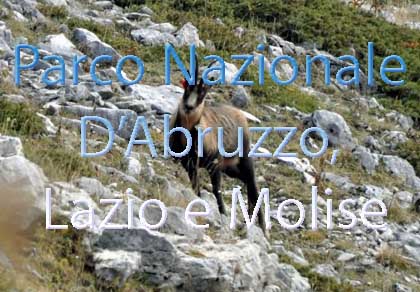
One of Italy’s most famous and oldest national parks
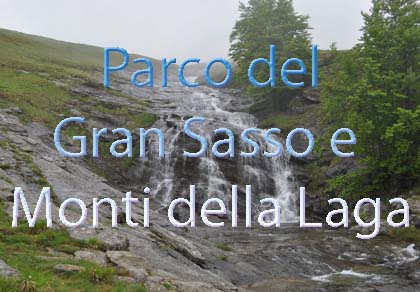
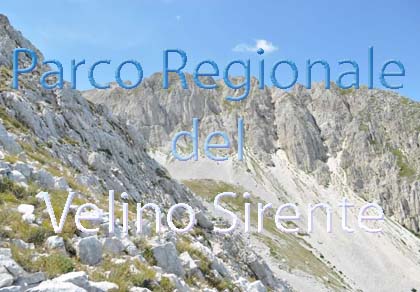
Located in the heart of the Apennines, home to the beautiful villages of the Rocche Plateau
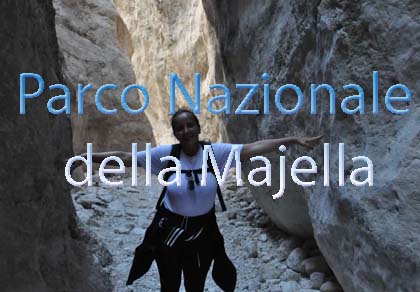
One of the snowiest places in Italy, a unique mountain massif rising close to the sea

Choose between sea or mountains, summer or winter, a sporty holiday or a relaxing one — Abruzzo has it all

Abruzzo is famous for its cuisine, both mountain and coastal, with traditions that vary from area to area
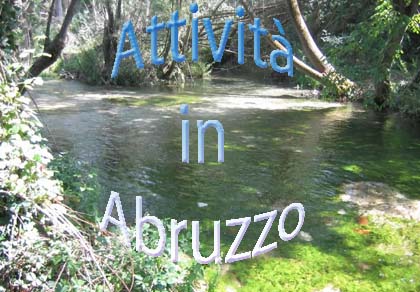
Walks, diving, climbing, mountain biking, horse riding — all outdoor activities available in Abruzzo

Large pieces of pork with sweet pepper, in a pig’s bladder: a Slow Food Presidium.

The lean salami pressed under boards, from the Frentano tradition: a Slow Food Presidium.

Pear-shaped stretched-curd cow’s milk cheese, hung in pairs to age.

The extra virgin oil of the Chieti hills, between the Majella and the sea, from the Gentile di Chieti olive.

Small red horn peppers, dried on strings and ground: a Slow Food Presidium.

The «mazzaferrata» artichoke of the Vastese, celebrated every spring at the Cupello festival.
Olives picked in autumn and milled within days, a climate between sea and mountains and traditional varieties such as Gentile di Chieti and Leccino: a fruity extra virgin oil, best used raw.
An extra virgin oil with Protected Designation of Origin.
Colline Teatine PDO oil is an extra virgin olive oil with Protected Designation of Origin, recognised by the European Union in 1997 (Reg. CE 1065/97). It is made from olives grown in the area defined by the specification, mainly of the Gentile di Chieti and Leccino varieties.
To carry the PDO mark the oil must follow precise rules on varieties, harvest, milling and characteristics, checked by an independent body.
The production area covers the hills around Chieti, in the province of Chieti. The area covers 79 municipalities of the province, from the hills of the Trabocchi Coast to the foot of the Majella, between Chieti, Lanciano, Ortona and Vasto.
A good extra virgin oil is best appreciated raw: a drizzle is enough to lift simple dishes.
Contacts checked on the official websites in October 2026: check availability and prices before ordering.
We could not find verified contacts for the protection consortium. Colline Teatine PDO oil is sold at the mills and olive farms of the province of Chieti: check for the PDO mark on the label.
Tap a photo to enlarge it.

The image is an illustration drawn for abruzzoparchi.it: we could not find free photos showing the Abruzzo product itself. If you have a photo to share, write to us.
Olive trees have been grown on the Abruzzo hills since ancient times: the mills, once driven by animals or water, were the centre of village life during the harvest months.
Many families still take the olives from their own trees to the mill, and the November harvest is a celebration: the first oil is tasted on toasted bread.
Il nostro menù con l'elenco dei nostri collegamenti rapidi.
The most popular ski resorts, the updated snow report and useful information on how to find lifts or book accommodation for your winter holiday
Vai
View the webcams in Abruzzo and check real‑time weather conditions. Some webcams belong to www.abruzzoparchi.it, others are located throughout the region
Vai
Weather forecasts for the coming days in Abruzzo. Live weather via our webcams and temperatures recorded in several mountain areas
Vai
Maps for trekking, mountain biking, ski touring, running and horse riding. You can also download the GPX track of each route
Vai
Walks, diving, climbing, mountain biking, horse riding — all outdoor activities available in Abruzzo
Vai
Choose between sea or mountains, summer or winter, a sporty holiday or a relaxing one — Abruzzo has it all
Vai
Abruzzo is famous for its cuisine, both mountain and coastal, with traditions that vary from area to area
Vai
Abruzzo’s villages are famous for their fortresses, mountains and the traditional trabocchi along the southern coast
Vai
One of Italy’s most famous and oldest national parks
Vai
One of Italy’s wildest parks, with typical Apennine landscapes and Dolomite‑like peaks
Vai
Located in the heart of the Apennines, home to the beautiful villages of the Rocche Plateau
Vai
One of the snowiest places in Italy, a unique mountain massif rising close to the sea
Vai